
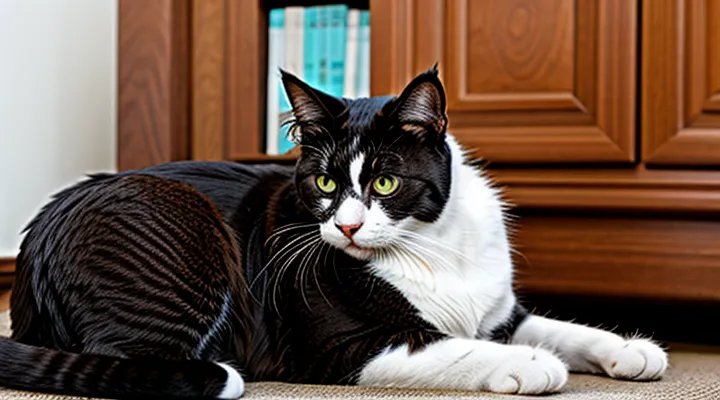
Understanding Feline Communication
Subtle Signs of Affection
Cats display comfort‑seeking behavior through nuanced actions that often escape casual observation. Recognizing these cues requires attention to body language, vocalizations, and environmental interactions.
A cat that wishes to soothe its human may:
- Gently brush its head or cheek against the person’s hand, face, or clothing. This “bunting” transfers scent and signals trust.
- Position itself in close proximity while maintaining a relaxed posture, such as lying on the lap, chest, or beside the person with paws tucked under the body.
- Offer soft, intermittent purring that varies in intensity, indicating a calm, supportive state rather than mere contentment.
- Extend a paw to lightly tap or knead the person’s skin, mirroring the infant‑like motion that releases endorphins in the feline.
- Direct its gaze toward the human, occasionally blinking slowly. The “slow blink” functions as a non‑verbal reassurance.
- Bring a favorite toy or object to the person, dropping it at their feet as an invitation to engage, which can alleviate stress.
- Adjust its tail to a relaxed, slightly raised position, sometimes curling around the human’s arm, reflecting a desire for closeness.
Additional indicators include a lowered, soft meow that lacks urgency, and a tendency to follow the person from room to room, maintaining presence without demanding attention. When these behaviors co‑occur, they form a coherent pattern of feline empathy designed to provide emotional support.
The Cat's Perspective on Comfort
As a feline behavior specialist, I interpret a cat’s attempts to comfort humans through a series of deliberate actions rooted in instinct and social bonding. Cats perceive human stress as a disruption of the shared environment; their response aims to restore equilibrium for both parties.
When a cat initiates comfort, it typically exhibits the following behaviors:
- Soft, rhythmic purring directed at the person, often louder than during ordinary relaxation.
- Slow blinking toward the individual, a signal of trust that translates into reassurance.
- Gentle head‑butting or nudging with the forehead, which deposits scent and conveys a calming presence.
- Light pawing or kneading on the lap or chest, mimicking the nursing motion that produces a soothing effect.
- Nesting close to the person’s body, positioning itself on the arm, shoulder, or chest to provide warmth and a sense of security.
- Offering a small, controlled bite or mouth‑touch, known as a “love bite,” which signals affectionate engagement without aggression.
These gestures serve a dual purpose: they reduce the cat’s own anxiety and convey a calming signal to the human. The cat’s perspective frames comfort as a reciprocal exchange; by aligning its body language with the owner’s emotional state, the animal reinforces the bond that underpins cohabitation.
Understanding these cues allows observers to differentiate genuine comfort attempts from routine affection. A cat that maintains eye contact while slow‑blinking, combines purring with physical contact, and remains relaxed in posture is actively trying to soothe the human companion. Recognizing this pattern enables a more responsive and supportive interaction, benefiting both species.
Common Comforting Actions
Purring and Its Variations
Understanding feline purrs is essential for recognizing when a cat is offering solace. A cat’s vibration can convey distinct emotional states; interpreting these nuances helps humans respond appropriately.
- Steady, low‑frequency purr (25‑30 Hz): Indicates deep relaxation and a desire to share calm. The cat often positions itself close, maintaining eye contact or gently resting its head on the person.
- Intermittent, higher‑pitch purr (30‑45 Hz): Occurs during moments of mild stress or uncertainty. The cat may combine the sound with slow blinking, signaling reassurance.
- Dual‑tone purr (alternating low and high frequencies): Frequently observed when the animal is simultaneously content and attentive to the human’s mood. The cat may nuzzle or knead, reinforcing the comforting intent.
- Purr accompanied by trilling or chirping: Suggests an active effort to engage the owner, often paired with a soft paw placement or a gentle roll onto its back.
Contextual cues refine interpretation. A cat that initiates contact, aligns its body toward the person, and sustains eye contact while purring is deliberately providing emotional support. Conversely, a solitary purr without physical proximity usually reflects self‑soothing rather than outreach.
Monitoring the duration of each purr pattern aids assessment. Prolonged low‑frequency vibrations lasting more than a minute typically denote sustained comfort‑seeking behavior, whereas brief bursts of higher pitch are transient reassurance attempts.
In practice, observe the cat’s body language alongside the purr. A relaxed posture, ears forward or slightly rotated, and a soft tail indicate a genuine attempt to console. Recognizing these specific purr variations equips owners to respond with appropriate affection, reinforcing the reciprocal bond.
Head Bunting and Rubbing
Cats use head bunting and body rubbing as deliberate social signals. When a cat presses its forehead against a person’s hand, cheek, or face, the action deposits pheromones that reinforce a bond. The cat’s cheeks, equipped with scent glands, leave a familiar odor on the human, which the animal interprets as a mark of safety. This behavior often occurs when the owner appears stressed, anxious, or physically vulnerable, indicating the cat’s intent to provide reassurance.
Key indicators that the bunting is meant as comfort rather than mere greeting include:
- Repeated, gentle presses rather than a single, brief contact.
- Persistent contact while the owner is seated or lying down, suggesting the cat is staying close.
- Accompanying slow blinking, a sign of trust that enhances the soothing effect.
- Absence of aggressive or overstimulating actions such as swatting or biting.
When combined with additional soothing gestures-soft purring, kneading with the paws, or lying across the owner’s lap-the head bunting and rubbing form a clear pattern of feline consolation. Recognizing this pattern enables owners to respond appropriately, reinforcing the mutual sense of security.
Kneading or "Making Biscuits"
Kneading, often called “making biscuits,” is a distinct motor pattern in which a cat rhythmically presses its forepaws against a soft surface. The motion originates in kittenhood, when pups stimulate their mother’s milk flow. In adulthood the action persists as a self‑soothing mechanism and as a social signal directed toward trusted humans.
When a cat applies this behavior toward a person, several concurrent indicators confirm an intention to provide comfort:
- Body positioned close to the owner, torso relaxed, tail low or gently flicking.
- Purring at a steady, low frequency, rather than a rapid, agitated trill.
- Eyes half‑closed or slowly blinking, signaling trust.
- Head or cheek nudges against the person’s hand, face, or leg, delivering scent‑based reassurance.
- Absence of defensive postures such as flattened ears, arched back, or swishing tail.
Neurologically, the act engages the cat’s limbic system, releasing endorphins that reduce stress. The tactile pressure on the owner’s skin activates mechanoreceptors, which can lower the human’s cortisol levels and promote a sense of safety.
Recognizing kneading as a comfort gesture allows caregivers to respond appropriately: maintain a calm environment, offer a stable surface for the cat to press against, and refrain from abrupt movements that could disrupt the soothing exchange. Consistent positive reinforcement-gentle petting, soft spoken words-strengthens the mutual calming loop, enhancing the bond between cat and caretaker.
Licking and Grooming
Cats often express empathy through licking and grooming behaviors directed at their human companions. When a cat repeatedly brushes its tongue against your skin, hair, or clothing, it is mimicking the social grooming observed within feline groups. This action signals a desire to strengthen the bond and provide reassurance.
The following indicators clarify that the licking is a comforting gesture rather than a purely hygienic act:
- The cat approaches while you are visibly upset, tired, or ill.
- Licking is gentle, intermittent, and accompanied by a relaxed posture.
- The cat maintains eye contact or a soft blink, a sign of trust.
- After licking, the cat may settle close by, often purring at a low frequency.
Grooming extends beyond oral contact. When a cat uses its paws to gently massage or knead your lap, it replicates the kneading behavior kittens perform on their mother’s belly to stimulate milk flow. In an adult cat, this motion redirects the soothing sensation toward the human, conveying calm.
Additional grooming cues include:
- Rubbing the head or cheeks against you while simultaneously licking the area.
- Licking a specific spot repeatedly, such as the back of the hand or forearm, rather than a broad sweep.
- Alternating between licking and light nuzzling, creating a rhythmic pattern that mirrors feline social grooming.
These actions are purposeful and context‑dependent. When observed alongside other comforting signals-such as a lowered tail, slow blinking, and a steady, low‑pitch purr-they form a reliable framework for recognizing a cat’s intent to console its owner.
Body Language Cues
Eye Contact and Slow Blinks
As a feline behavior specialist, I observe that eye contact combined with slow blinks conveys reassurance from a cat to a human. When a cat fixes its gaze on you and then gently closes its eyes for a brief moment before reopening them, the gesture signals trust and a desire to soothe.
- Direct stare followed by a pause indicates the cat is focusing attention on you.
- The slow blink, often described as a “cat kiss,” reduces tension and mimics a calm, contented state.
- Repeating the blink sequence reinforces the comforting signal and encourages reciprocal relaxation.
The pattern differs from typical predatory fixation, which involves unblinking, intense focus. A cat that alternates between looking and slowly closing its eyes demonstrates a deliberate effort to lower arousal levels for both parties. Recognizing this behavior allows you to respond with a matching slow blink, reinforcing the bond and enhancing mutual calm.
Tail Position and Movement
Cats communicate reassurance through subtle tail cues. A relaxed, upright tail signals confidence and a desire to be close, often accompanying a gentle approach to a distressed person. When the tail is held high with a slight curve at the tip, the cat signals a friendly intent and is likely offering emotional support.
A slow, sweeping motion of the tail while the cat remains near you indicates a calming presence. The feline may gently brush the tail against your leg or hand, creating a tactile reminder of its companionship. This behavior differs from the rapid, agitated flicking that accompanies irritation.
Key tail patterns associated with comforting behavior include:
- Tail held vertically, tip slightly curved forward.
- Slow, rhythmic swaying while the cat is stationary or walking alongside you.
- Light, intermittent taps of the tail against your skin or clothing.
- A soft, partially puffed tail that quickly deflates, showing initial alertness that transitions to relaxation.
When a cat’s tail transitions from a stiff, upright posture to a fluid, relaxed sweep, it reflects a shift from alertness to a soothing demeanor. Observing this progression helps distinguish genuine comfort attempts from mere curiosity or playfulness.
Relaxed Posture and Proximity
Cats convey reassurance through body language that emphasizes calmness and closeness. When a cat adopts a relaxed posture-sprawling limbs, soft musculature, and a loosely curled tail-it signals a low‑stress state and a willingness to share that serenity with a human companion. The animal’s ears may be slightly forward or neutral, and the eyes often appear half‑closed or display slow blinks, indicating trust and a desire to soothe.
Proximity reinforces this comfort‑offering behavior. A cat that settles near a person, whether on a lap, beside a chair, or at the foot of a bed, demonstrates intentional closeness. The animal may adjust its position to maintain contact, gently kneading or resting its head against the individual, actions that release oxytocin‑like hormones in both species.
Key indicators of relaxed posture and proximity include:
- Body stretched or loosely curled, without tense muscles.
- Tail relaxed, often wrapped around the body or gently draped.
- Ears in a neutral or slightly forward position.
- Slow blinking or half‑closed eyes.
- Physical contact maintained for an extended period, with occasional gentle nudges or head presses.
Observing these cues allows a person to recognize when a feline companion is actively providing emotional support. Recognizing and reciprocating this behavior-by offering gentle petting or speaking softly-strengthens the bond and enhances the therapeutic effect for both parties.
Contextual Clues
During Times of Stress or Sadness
Cats instinctively respond to human emotional states. When a person is under pressure or feeling down, a cat may display specific behaviors that signal an attempt to provide comfort.
- Slow blinking toward the owner, often accompanied by a relaxed posture, indicates trust and an effort to soothe.
- Gentle head‑butting or nudging with the forehead directs attention to the person’s face, a common affiliative gesture.
- Purring at a low, steady frequency, especially when the cat is close to the body, serves as a calming vibration that can reduce stress hormones.
- Resting on the lap, chest, or shoulders creates physical warmth and steady pressure, mimicking a therapeutic embrace.
- Bringing a favorite toy or object and placing it near the owner suggests an intention to distract and engage the person in a positive activity.
- Soft vocalizations, such as quiet trills or murmurs, accompany the cat’s proximity and reinforce a sense of companionship.
These actions are not random; they are consistent with feline social bonding mechanisms. Recognizing them allows a person to accept the cat’s support, which research shows can lower cortisol levels and improve mood. The key is to observe the cat’s body language, note the context of the interaction, and respond with gentle acknowledgment, reinforcing the mutual benefit of the comforting exchange.
Following an Unpleasant Event
When a distressing incident occurs, cats often switch from their usual independent demeanor to behaviors that signal an attempt to soothe their human companion. The shift is observable through specific, repeatable actions rather than vague affection.
- The cat positions itself directly on the person’s lap or chest, maintaining steady, gentle pressure that mimics a therapeutic massage.
- Purring intensifies, with a frequency range of 25-150 Hz known to promote tissue regeneration and lower heart rate.
- The animal performs slow, rhythmic kneading with its paws, a motion associated with the release of endorphins in both species.
- It brings a favorite toy or a soft object, placing it near the person’s hand as a tactile distraction from emotional pain.
- Eye contact is sustained but soft, pupils slightly dilated, conveying alertness without threat.
Additional cues include head‑butting the person’s cheek, rubbing its cheeks against the skin to deposit facial pheromones, and emitting low, melodic meows that differ from hunger calls in pitch and duration. These vocalizations are calibrated to elicit a calming response, as studies show they trigger the listener’s parasympathetic nervous system.
The combination of proximity, tactile engagement, and vocal modulation forms a reliable pattern for recognizing feline consolation after an upsetting event. Observing these behaviors allows a person to acknowledge the cat’s supportive intent and to respond in a manner that reinforces the bond.
When You're Feeling Unwell
Cats often respond to a person’s physical discomfort with specific, observable actions. Recognizing these signals helps you determine whether your pet is deliberately offering solace.
When you feel ill, a cat may:
- Sit or lie directly on your lap, chest, or abdomen, maintaining steady contact for extended periods.
- Press a warm paw against your face or hand, a behavior known as “kneading” that transfers body heat and creates a soothing rhythm.
- Purr at a low, steady frequency, which research links to the release of calming vibrations.
- Gently nudge your cheek or mouth with its nose, encouraging you to breathe more deeply.
- Follow you from room to room, positioning itself near you whenever you move, indicating a desire to stay close.
Additional cues include a softened gaze, slow blinking, and a relaxed tail held low or wrapped around you. These gestures differ from typical play or hunting displays, which involve rapid movements, high‑pitched vocalizations, or aggressive swatting.
Interpretation requires context. If the cat’s behavior persists despite distractions, is accompanied by physical contact, and lacks the excitement of a hunting stance, the most plausible explanation is an attempt to provide comfort. Monitoring these patterns allows you to acknowledge your cat’s supportive role and respond in kind, fostering a mutually beneficial bond during periods of illness.
Interpreting Multiple Signals
The Combination of Behaviors
Cats seldom display a single gesture when they intend to soothe a person. The signal that a feline is offering comfort emerges from a specific combination of actions, each reinforcing the others to create a clear message.
Observing multiple cues simultaneously reduces the risk of misinterpretation. When a cat approaches with the following behaviors grouped together, the likelihood that it is trying to console you rises sharply:
- Slow, deliberate blink directed at your face.
- Gentle head‑butt or nuzzle against your hand, arm, or cheek.
- Soft, rhythmic kneading of paws on a nearby surface or on your lap.
- Low‑volume purring that persists for more than a few seconds.
- Body positioned close to you, often lying on its side or exposing its belly.
- Tail held loosely, sometimes wrapping partially around you or resting against your leg.
Each element alone can indicate relaxation, affection, or curiosity. The diagnostic power resides in their co‑occurrence: a slow blink paired with a head‑butt, followed by kneading and sustained purring, signals a concerted effort to provide emotional support.
Context matters. The combination typically appears when you are seated or lying down, especially after a stressful event such as a loud noise or a medical visit. The cat will remain in proximity, monitor your movements, and repeat the sequence if you appear unsettled.
For reliable identification, note the timing, duration, and sequence of the behaviors. Consistent presentation of the full set suggests the cat perceives your state and actively attempts to alleviate it. Adjust your response by offering gentle petting or a quiet space, reinforcing the cat’s comforting role and strengthening the mutual bond.
Consistency Over Time
As a feline behavior specialist, I emphasize that reliable interpretation of a cat’s comforting intent depends on observing patterns that persist across days and weeks rather than isolated incidents. A single purr or head‑butt may have multiple meanings; only when the same behavior recurs in similar circumstances does it signal a deliberate effort to soothe the owner.
Repeated actions that align with the owner’s emotional state-such as approaching during periods of sadness, resting on the lap for extended periods, or gently kneading while the owner is seated-demonstrate consistency. The longevity of these behaviors distinguishes genuine comfort from momentary curiosity.
Key indicators of sustained comforting behavior include:
- Persistent proximity during the owner’s low‑energy moments, lasting more than a few minutes each time.
- Regularly timed visits to the owner’s preferred resting spot, especially when the owner appears distressed.
- Consistent use of soft vocalizations (low‑frequency purrs) paired with physical contact over multiple days.
- Repeatedly offering body warmth by curling around the owner’s limbs during prolonged periods of stillness.
When these signs appear consistently, they form a reliable profile of the cat’s intent to provide emotional support. Short‑term fluctuations-such as a sudden burst of playfulness-should not be conflated with comforting behavior unless they are part of an ongoing pattern.
In practice, documenting the frequency, duration, and context of each interaction creates a data set that clarifies the cat’s role as a comfort provider. Over time, the accumulation of consistent evidence allows owners to distinguish intentional soothing from coincidental behavior with confidence.