
Cats - everything you need to know about breeds, care, behavior
Most popular
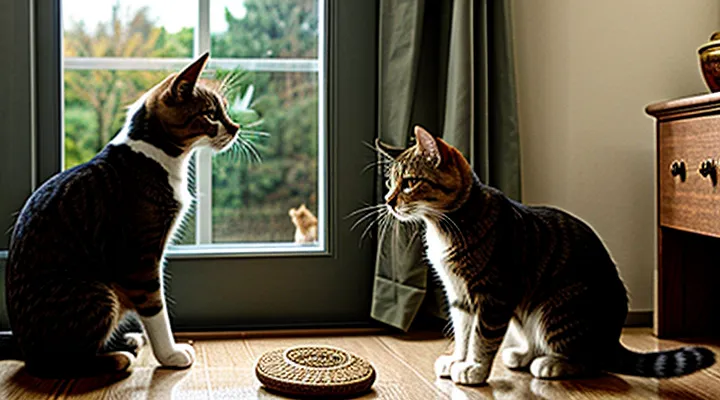
Domesticating Cats: A Historical Perspective
Views: 5 860. Date latest changes: 2025-10-02.
Archaeological findings provide invaluable insights into the historical relationship between humans and cats, offering a glimpse into the process of cat domestication. The earliest evidence of human-feline interactions dates back to around 9500 years ago in Cyprus, where both wildcat remains and human artifacts were discovered together.

The Global Cat Population: Trends and Demographics
Views: 5 558. Date latest changes: 2025-10-02.
Accurate estimation of the worldwide feline population relies on a combination of direct and indirect data sources. Household questionnaires collect owner‑reported numbers of pet cats, while veterinary clinic registries provide records of neutered, vaccinated, and treated animals.

The Anatomy of a Predator: Physical Characteristics of Big Cats
Views: 2 409. Date latest changes: 2025-10-02.
The jaw muscles of big cats, such as lions and tigers, are remarkably powerful and play a critical role in their predatory behavior. These muscles, primarily the masseter and temporalis, enable the cat to exert immense force when clamping down on prey.

Instruction: how to teach a cat not to be afraid of water.
Views: 2 294. Date latest changes: 2025-10-02.
Cats exhibit a pronounced aversion to water because their ancestors evolved in arid and semi‑arid environments where exposure to large bodies of liquid offered little survival advantage. Early felids relied on scent marking and stealth rather than swimming, so natural selection favored individuals that remained dry to preserve olfactory cues and maintain insulation.

Exploring the Diversity of Cat Breeds Worldwide
Views: 2 087. Date latest changes: 2025-10-02.
The origins of cat domestication can be traced back to ancient civilizations, providing a fascinating insight into the evolution of various feline breeds worldwide. Archaeological evidence suggests that cats were first domesticated around 10,000 years ago in the Fertile Crescent region of the Middle East.

Understanding the Behavioral Differences Between Cats and Dogs
Views: 1 921. Date latest changes: 2025-10-02.
The behavioral differences between cats and dogs are profoundly shaped by their evolutionary histories, with cats exhibiting a more solitary nature while dogs display a pack mentality. This dichotomy is rooted in their distinct origins: whereas cats have descended from small, independent predators like the African wildcat, dogs have evolved from wolves, which are social creatures that thrive in groups.
Trending today
Instruction: how to teach a cat not to be afraid of water.
Views: 2 294. Date latest changes: 2025-10-02.
Cats exhibit a pronounced aversion to water because their ancestors evolved in arid and semi‑arid environments where exposure to large bodies of liquid offered little survival advantage. Early felids relied on scent marking and stealth rather than swimming, so natural selection favored individuals that remained dry to preserve olfactory cues and maintain insulation.

Instruction: how to teach a cat not to jump on the dining table.
Views: 355. Date latest changes: 2025-10-02.
Cats leap onto tables for several instinctive and environmental reasons. Their natural predatory behavior drives them to seek elevated perches where they can observe movement and practice stalking. A high surface offers a clear line of sight to potential prey, even if that prey is a moving toy or a passing human foot.

Instruction: how to teach a cat not to run out of the apartment.
Views: 345. Date latest changes: 2025-10-02.
Cats bolt primarily because their innate survival mechanisms clash with the confined environment of an apartment. When a door opens, the sudden change in spatial parameters triggers a flight response that has evolved to protect against predators and secure new hunting grounds.

Instruction: how to teach a cat not to scream at 4 in the morning.
Views: 370. Date latest changes: 2025-10-02.
Understanding why a cat vocalizes at dawn is essential for effective intervention. Domestic cats are crepuscular predators; their internal clocks trigger heightened activity at sunrise and sunset. Hunger, territorial signaling, and attention seeking align with this period, prompting loud calls that owners perceive as screaming.

Instruction: how to teach a cat the «sit» command.
Views: 168. Date latest changes: 2025-10-02.
Cats rely on subtle body language to express willingness, discomfort, and interest. A relaxed posture, forward‑facing ears, and slow blinking indicate receptivity, while a tucked tail, flattened ears, or sudden darting movements signal stress.

Instruction: how to teach a cat to fetch toys.
Views: 301. Date latest changes: 2025-10-02.
As a veterinary behavior specialist, I have observed that training a cat to retrieve toys yields measurable advantages. Increases cardiovascular activity, helping prevent weight gain and associated health issues. Engages problem‑solving circuits, reducing boredom‑related stress and destructive habits.
Date latest changes on the site

Instruction: why cats love to knock things off tables and shelves so much.
Date of published: 2025-10-01.
Date latest changes: 2025-10-02 00:59.
Cats exhibit a striking tendency to dislodge objects from tables and shelves, a behavior that has puzzled owners and researchers alike. The phenomenon stems from a combination of sensory, predatory, and environmental factors that trigger innate responses.

Instruction: why a cat tries to «wash» your face.
Date of published: 2025-10-01.
Date latest changes: 2025-10-02 00:59.
Cats possess a strong innate grooming drive that extends beyond self‑maintenance. When a cat repeatedly contacts a human’s face with its tongue or paws, it is reproducing the same behavior it uses to keep its own fur clean and free of debris.

Instruction: why a cat «talks» to you when you come home.
Date of published: 2025-10-01.
Date latest changes: 2025-10-02 00:59.
Cats employ a limited but purposeful vocal repertoire when their owner returns. Understanding these sounds clarifies the apparent “conversation” and reveals how felines communicate need, recognition, and emotional state. The most common vocalizations include:
Terms
Precise definition of the term: Ascites
Precise definition of the term: Atopy
Precise definition of the term: Automatic feeder
Precise definition of the term: Babesiosis
Precise definition of the term: Ball
Precise definition of the term: Bandage
Precise definition of the term: Barn cat
Precise definition of the term: Barn lifestyle
Precise definition of the term: Bartonellosis
Precise definition of the term: Bathing
New answers to questions
Zhukov in "How We Buried the Cat" summary for a reader's diary? Answer received: 2025-09-20 10:03.
Zabolotzky "How Mice Fought with a Cat" print? Answer received: 2025-09-20 10:03.
Yuri kitten who is it? Answer received: 2025-09-20 10:03.
Yuri Kitten military correspondent who is this? Answer received: 2025-09-20 10:03.
You took a one-month-old kitten, what to do? Answer received: 2025-09-20 10:03.
You took a kitten away from its mother, how can you calm the kitten down? Answer received: 2025-09-20 10:03.
You took a kitten away from its mother, how can you calm the cat down? Answer received: 2025-09-20 10:03.
You stepped on the cat, what to do at home? Answer received: 2025-09-20 10:03.
You stepped on a kitten, what to do? Answer received: 2025-09-20 10:03.
You stepped on a kitten, what should you do, it's breathing? Answer received: 2025-09-20 10:03.
Trend answers to questions today
Which of the listed animals: dolphins, dogs, cats, bats? Answer received: 2025-09-03.
Which of the listed blood group systems is relevant to cats? Answer received: 2025-09-03.
Which of the listed bodies emits energy: stove, human body, kitten? Answer received: 2025-09-03.
Which of the listed ones does the body emit energy: a stove, a human body, an electric light bulb, a kitten? Answer received: 2025-09-03.
Which of the listed organs are homologous: gills of a crab and lungs of a cat, trunk of an elephant? Answer received: 2025-09-03.
Which of the listed organs are homologous: gills of a crab, lungs of a cat? Answer received: 2025-09-03.
Which of the listed organs are homologous: gills of a crayfish and lungs of a cat? Answer received: 2025-09-03.
Which of the listed organs are homologous to gills of a crayfish and lungs of a cat? Answer received: 2025-09-03.
Which of the listed organs are homologues of the lungs in a cat? Answer received: 2025-09-03.
Which of the owners does the cat love? Answer received: 2025-09-03.
Popular answers to questions
Can kittens be fed dry food and meat? Answer received: 2025-09-20. Views: 6043.
What antibiotics should be given to a cat after tooth extraction? Answer received: 2025-09-03. Views: 4879.
What to do when a cat goes out for the first time? Answer received: 2025-09-03. Views: 2512.
How to inject a cat intramuscularly correctly? Answer received: 2025-09-03. Views: 1765.
Can I avoid neutering my cat? Answer received: 2025-04-30. Views: 1741.
What to do when a cat behaves strangely? Answer received: 2025-09-03. Views: 1730.
Why is the kitten offended? Answer received: 2025-09-20. Views: 1726.
How can you tell if something is wrong with your cat? Answer received: 2025-09-03. Views: 1570.
After how long should a cat urinate after surgery? Answer received: 2025-09-03. Views: 1562.
What to do for a child and a cat? Answer received: 2025-09-03. Views: 1551.