
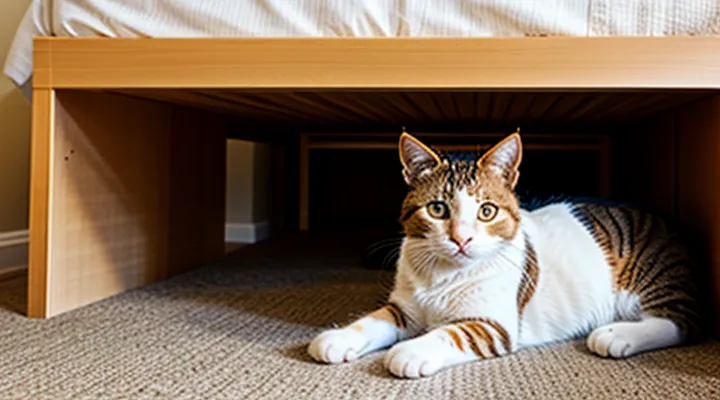
Instinctual Behavior
Predatory Instincts
Cats rely on a finely tuned predatory system that drives them to seek concealed positions where they can observe and strike without detection. The space beneath a bed satisfies this requirement by providing low light, limited visual access, and proximity to floor-level movement where insects and small rodents travel. The environment also offers a stable platform for rapid acceleration during a pounce, while the surrounding furniture reduces the risk of escape routes for potential prey.
Key aspects of the predatory drive that manifest in this behavior include:
- Stealth positioning - the ability to remain unseen while monitoring the surrounding area.
- Ambush readiness - a posture that allows immediate, powerful lunges toward moving targets.
- Sensory optimization - enhanced hearing and whisker feedback in a confined space, improving detection of subtle vibrations.
- Energy conservation - a sheltered spot reduces the need for constant movement, preserving stamina for hunting bursts.
Understanding these motivations helps owners create alternative safe zones that satisfy the cat’s instinctual needs, reducing the likelihood of prolonged hiding and promoting healthier play and exercise patterns.
Prey Instincts
Cats seek shelter beneath beds because their predatory circuitry drives them to occupy confined, low‑visibility zones when potential prey are nearby. The instinct to stalk and ambush triggers a physiological response: pupils dilate, muscles tense, and the animal scans for movement. In a tight space, the cat can monitor passing insects or rodents while remaining protected from larger threats.
A confined area offers two advantages aligned with hunting behavior. First, it reduces the cat’s exposure to unpredictable stimuli, allowing the animal to conserve energy for a sudden strike. Second, the darkness under a bed mimics the cover of grass or brush where wild felids wait for unsuspecting victims. The cat’s brain interprets the limited field of view as an optimal perch for a covert attack.
When a cat detects the presence of small prey-such as a moth fluttering near the foot of the bed-the animal often positions itself under the mattress, ready to pounce. The proximity to the floor shortens the distance to the target, while the surrounding furniture creates a barrier against larger animals that might interrupt the hunt.
Understanding this predatory motivation helps owners anticipate the behavior. Providing alternative hideaways that mimic the same low‑light, enclosed environment can satisfy the cat’s instinct without compromising household organization. A dedicated cat cave or a box with a cut‑out opening offers a comparable ambush site, reducing the frequency of under‑bed concealment.
Environmental Factors
Loud Noises
Cats instinctively seek refuge when auditory stimuli exceed their comfort threshold. Sudden, high‑decibel sounds trigger the feline startle response, causing a rapid assessment of safety. The most secure micro‑environment is often a low‑profile space such as the area beneath a bed, where visual exposure is limited and acoustic reverberation is reduced.
Key characteristics of disruptive noises include:
- Sharp frequency peaks (e.g., alarms, doorbells) that exceed 70 dB.
- Rapid onset and unpredictable duration (e.g., vacuum cleaners, fireworks).
- Low‑frequency rumble that resonates through walls and floors (e.g., construction equipment).
When any of these elements are present, a cat’s auditory cortex signals potential threat, activating the sympathetic nervous system. Muscle tension, increased heart rate, and a drive to minimize sensory input lead the animal to press its body against the underside of the bed. This posture aligns the head downward, shielding the ears while maintaining a ready posture for rapid escape if necessary.
Behavioral observations confirm that cats emerging from this position do so only after the noise subsides or after a discernible decrease in sound intensity. Managing household acoustics-using soft‑close doors, reducing sudden vacuum cycles, and providing alternative hideaways-can diminish the frequency of under‑bed retreats.
Unfamiliar Objects
Cats retreat beneath the bed when presented with novel objects because the space offers concealment, reduced sensory input, and a familiar escape route. Unfamiliar items disrupt a cat’s expectation of safety; the immediate response is to seek a location where visual exposure is limited and movement can be monitored from a protected position.
Key factors influencing this behavior include:
- Sudden introduction of items with unfamiliar textures (plastic containers, metallic gadgets).
- Objects that emit unfamiliar sounds (vibrating devices, alarms).
- Items that alter the visual landscape (new furniture, decorative sculptures).
- Substances with strong odors (perfumes, cleaning chemicals).
Each factor triggers heightened alertness in the feline nervous system. The cat’s brain interprets novel stimuli as potential threats, activating the fight‑or‑flight response. The area under the bed provides a low‑profile refuge where the animal can observe the environment while minimizing exposure. This choice also aligns with the cat’s instinct to remain close to the ground, where escape routes are more accessible.
From a physiological perspective, the cat’s vestibular and auditory systems are highly sensitive. When an unfamiliar object generates unexpected vibrations or sounds, the animal’s equilibrium perception is challenged, prompting immediate withdrawal to a stable surface. The bed’s underside offers a flat, stable platform that reduces the risk of loss of balance.
In practice, minimizing the cat’s hiding behavior involves gradual desensitization to new objects. Introducing items at a distance, allowing the cat to investigate at its own pace, and maintaining the bed’s under‑space as an optional, not mandatory, shelter can reduce reliance on that specific refuge.
New People or Animals
Cats retreat to the space beneath a bed when novel individuals or unfamiliar animals enter their environment. The confined, low‑light area offers a predictable shelter that reduces exposure to potential threats.
The presence of a new person introduces unfamiliar scents, sounds, and movement patterns. A cat’s olfactory system detects the foreign odor immediately, triggering a defensive response. When the newcomer approaches the cat’s usual territory, the animal evaluates the risk and often selects the bed’s underside as a safe distance from direct contact.
Similarly, the introduction of another animal-whether a dog, another cat, or a small mammal-creates competition for resources such as food, litter boxes, and resting spots. The resident cat may anticipate conflict and preemptively seek a hidden perch to avoid confrontation.
Key factors that increase the likelihood of this behavior include:
- Sudden changes in household traffic patterns
- Strong odors from new humans (perfume, aftershave) or animals (pheromones, waste)
- Loud vocalizations or abrupt movements near the cat’s primary resting area
- Limited alternative hiding places (e.g., lack of cat trees, boxes, or curtains)
Mitigation strategies focus on gradual acclimation. Allow the newcomer to spend brief, quiet periods near the bed while the cat remains concealed, rewarding calm behavior with treats. Provide additional secure hideaways-cardboard boxes, covered beds, or elevated platforms-to give the cat options beyond the space under the bed. Consistent routine, minimal disruption, and controlled exposure reduce stress, encouraging the cat to resume normal activity outside the concealed zone.
Emotional States
Fear
Veterinary behaviorist Dr. Elena Morales explains that fear drives a cat’s choice of concealment beneath a bed. When a cat perceives a threat-loud noises, unfamiliar visitors, sudden movements-it instinctively seeks the smallest, darkest space that limits visual exposure and muffles sound. The area under a bed satisfies these criteria, offering a controlled microenvironment where the animal can monitor danger while remaining hidden.
Key fear triggers include:
- Abrupt auditory stimuli (vacuum cleaners, doorbells)
- Presence of unfamiliar humans or animals
- Changes in household layout or furniture arrangement
- Exposure to unfamiliar scents or chemicals
- Visual disturbances such as flashing lights or rapid motion
Physiological responses reinforce the behavior. Elevated cortisol levels increase heart rate and narrow the field of vision, prompting the cat to minimize sensory input. By positioning itself under the bed, the cat reduces peripheral vision, lowers auditory reach, and conserves energy while evaluating the threat.
Long‑term exposure to chronic stress can solidify this hiding pattern. Cats that repeatedly encounter fear‑inducing situations may develop a default response of retreating under furniture, even when the original trigger is absent. Interventions such as gradual desensitization, environmental enrichment, and safe retreat zones can modify the fear response, encouraging the animal to use alternative coping strategies.
Anxiety
Cats often retreat beneath furniture when they feel threatened, and anxiety is a primary driver of this behavior. Understanding the emotional state that prompts a cat to seek refuge under a bed can help owners address the underlying cause and improve the animal’s welfare.
Anxiety in felines manifests as heightened vigilance, rapid breathing, and a desire to remain out of sight. The condition arises when a cat perceives a situation as unsafe or overwhelming, triggering a fight‑or‑flight response that favors concealment.
Common triggers include:
- Sudden loud noises (e.g., vacuum cleaners, fireworks)
- Presence of unfamiliar people or animals
- Changes in routine or environment (moving houses, new furniture)
- Lack of safe, elevated perches
- Prior negative experiences associated with specific areas
Physiological signs accompany the behavioral response: dilated pupils, flattened ears, and a low, trembling body posture. These indicators confirm that the cat’s nervous system is activated, reinforcing the need for a secure hiding spot.
Interventions focus on reducing stressors and providing alternative safe zones:
- Gradually desensitize the cat to noises using low‑volume recordings and positive reinforcement
- Introduce a covered cat bed or a high perch away from traffic areas
- Maintain consistent feeding and play schedules
- Employ pheromone diffusers to create a calming ambient scent
- Offer interactive toys that redirect attention from perceived threats
By identifying anxiety as the root cause of under‑bed hiding and implementing targeted environmental adjustments, owners can encourage more visible, relaxed behavior while preserving the cat’s instinctual need for occasional seclusion.
Stress
Cats retreat under the bed primarily as a stress‑driven coping mechanism. When confronted with perceived threats, the feline nervous system triggers a fight‑or‑flight response; the “flight” option often manifests as seeking a confined, low‑visibility space. The bed provides darkness, limited access points, and a sense of enclosure that reduces sensory overload and lowers cortisol levels temporarily.
Stressors that prompt this behavior include:
- Sudden loud noises (vacuum cleaners, fireworks, door slams) that activate the auditory startle reflex.
- Introduction of unfamiliar animals or people, which challenges territorial boundaries.
- Changes in routine such as altered feeding times, relocation, or renovation work that disrupts predictability.
- Health concerns like pain, urinary issues, or dental problems that increase discomfort and heighten vigilance.
The physiological cascade begins with the amygdala signaling the hypothalamus, releasing catecholamines that increase heart rate and sharpen focus. In an attempt to regain control, the cat selects a location where visual fields are restricted, minimizing exposure to the stressor. Under‑bed spaces also allow quick escape routes-legs of the bed and surrounding furniture-providing both safety and an exit strategy.
Mitigating stress involves:
- Maintaining consistent daily schedules for feeding, play, and litter maintenance.
- Offering alternative safe zones such as covered cat beds, high perches, or enclosed tunnels.
- Reducing noise levels by using white‑noise machines or soft background music during disruptive events.
- Conducting veterinary examinations to rule out pain or medical conditions that may amplify stress responses.
Understanding the link between stress and the cat’s choice of hiding spot enables owners to create environments that satisfy the animal’s need for security while minimizing triggers that provoke anxiety.
Illness or Discomfort
Cats that retreat beneath a bed often do so because they are experiencing pain or physical unease. When a feline feels ill, the confined, dark space offers a sense of safety while minimizing movement that could aggravate the problem.
Typical health issues that trigger this behavior include:
- Dental disease causing facial discomfort
- Gastrointestinal upset resulting in abdominal pain
- Urinary tract infection or blockage producing pressure in the lower abdomen
- Arthritis or joint inflammation limiting mobility
- Respiratory infections that make breathing difficult in open areas
Owners should monitor for accompanying signs such as reduced appetite, vocalization, changes in litter‑box habits, or limp gait. The presence of these symptoms alongside the hiding pattern strongly suggests a medical condition rather than mere shyness.
If a cat consistently seeks refuge under the bed, a veterinary evaluation is advisable. Early diagnosis and treatment alleviate discomfort, restore normal activity, and prevent the habit from becoming entrenched.
Seeking Comfort and Security
Warmth
Cats often choose concealed locations for multiple reasons; thermal comfort is a decisive factor. Felids regulate body temperature within a narrow band and instinctively seek environments that minimize heat loss. The space beneath a bed offers a consistently warmer microclimate because it isolates the animal from cold floor surfaces, retains air warmed by the mattress, and positions the cat near the body heat of a sleeping person.
The under‑bed area provides specific thermal advantages:
- Ambient temperature higher than that of exposed floor tiles or hardwood.
- Limited air circulation reduces convective cooling.
- Radiant heat emitted from the mattress and, when present, a human body increases the surrounding temperature.
Understanding this motivation allows caregivers to offer alternative warm zones, such as heated pads or insulated cat beds, thereby reducing the need for the cat to remain in a confined space while still satisfying its thermoregulatory requirements.
Darkness
Cats seek refuge under beds because the space offers a controlled darkness that meets several physiological and behavioral needs. In low‑light environments, a cat’s pupils dilate fully, enhancing retinal sensitivity and allowing the animal to monitor subtle movements without exposing itself to bright, potentially threatening illumination. The darkness also muffles visual cues that might trigger a stress response, such as sudden shadows or reflections that a cat interprets as predators.
The confined area under a bed creates a microhabitat where ambient light levels remain consistently low. This stability reduces the frequency of rapid pupil adjustments, conserving ocular energy and preventing visual fatigue. Additionally, the dim surroundings lower the cat’s heart rate and cortisol levels, promoting a state of calm that facilitates rest.
Key advantages of the under‑bed darkness include:
- Protection from sudden flashes of light that can startle the animal.
- Enhanced ability to detect low‑contrast motion of potential prey or threats.
- Maintenance of a stable thermal microclimate, as darkness often correlates with reduced heat loss.
Understanding these factors helps owners recognize that the cat’s choice is not merely a whimsical preference but a response to specific sensory and physiological demands imposed by darkness. Adjusting lighting conditions or providing alternative low‑light shelters can satisfy the same needs while encouraging more visible resting spots.
Enclosed Spaces
Cats frequently seek refuge beneath beds because the space meets several innate needs. The enclosure provides a controlled environment that reduces perceived threats and supports physiological comfort.
Key factors influencing this behavior include:
- Safety perception - limited entry points allow the animal to monitor approaching movement while remaining concealed.
- Thermal regulation - the area retains warmth, which conserves energy and supports core temperature stability.
- Sensory reduction - lower exposure to sudden sounds, bright light, and visual stimuli diminishes stress.
- Territorial micro‑habitat - the confined zone becomes a personal stronghold within a shared living area.
- Stress mitigation - retreating to a small, private spot offers a predictable refuge during periods of environmental change.
Understanding these motivations assists owners in providing appropriate alternatives, such as dedicated cat caves or covered resting pads, which satisfy the same criteria without compromising household layout.
Behavioral Patterns
Playfulness
Cats often retreat to the space beneath a bed as a strategic element of their play repertoire. The confined area provides a defined arena where sudden bursts of movement can be initiated without external interference. By positioning themselves in this low‑visibility zone, a cat can observe passing stimuli, calculate timing, and execute rapid pounces that mimic predatory behavior while remaining concealed.
The environment under the bed offers several tactile and sensory advantages that enhance playful interaction:
- Soft, insulated surface reduces impact on joints during repeated jumps.
- Limited visual exposure lowers perceived threat, encouraging bold experimentation.
- Proximity to foot traffic creates a steady stream of moving targets for ambush drills.
- Acoustic dampening allows the animal to gauge subtle sounds, sharpening reflexes.
Behavioral specialists note that this hiding spot functions as a self‑constructed “playroom” where the feline can rehearse hunting sequences, test agility, and satisfy instinctual urges. The act of emerging from under the bed at the precise moment a stimulus passes reinforces learning cycles, strengthening motor coordination and confidence.
Consequently, the preference for this concealed location is not merely a fear response; it is a deliberate choice that maximizes the effectiveness of play-driven skill development. Understanding this dynamic helps owners provide appropriate enrichment, such as interactive toys placed near the bed’s perimeter, to channel the cat’s playful energy in a controlled manner.
Seeking Solitude
Cats often retreat to the space beneath a bed as a deliberate act of seeking solitude. This behavior serves several functional purposes.
- The area provides a confined, low‑light environment that reduces sensory stimulation, allowing the animal to recover from overstimulation or stress.
- Elevated lateral protection from the floor limits access to potential threats, creating a sense of safety without requiring full isolation from the household.
- The confined space conserves body heat, supporting thermoregulation during periods of rest or illness.
- The location offers a quiet observation point; the cat can monitor activity while remaining hidden, preserving an advantage for ambush or escape.
Physiologically, the cat’s nervous system responds to perceived threats by activating the sympathetic branch, prompting a search for secure, enclosed zones. The under‑bed region satisfies this need by combining physical barriers with minimal exposure.
Behaviorally, solitary retreats correlate with a cat’s innate predatory rhythm. After hunting or play, the animal requires a brief interval of undisturbed downtime to process sensory input and replenish energy reserves. The under‑bed space fulfills this requirement more effectively than open areas.
Understanding this pattern helps caregivers provide appropriate alternatives-such as covered cat beds or quiet corners-while respecting the animal’s intrinsic drive for solitary refuge.
Establishing Territory
Veterinary behaviorists consistently link a cat’s preference for the space beneath a bed to its innate drive to define and defend a personal zone. The area under the furniture constitutes a confined, easily monitored micro‑environment that the animal can claim as exclusive. By occupying this spot, the cat creates a physical boundary that limits entry to larger, less predictable sections of the household.
- The enclosed space reduces exposure to sudden movements, reinforcing a sense of control.
- Scent deposits from the cat’s paws and fur accumulate on the floor, marking the area with a recognizable chemical signature.
- Proximity to the bed allows the cat to observe occupants while remaining concealed, facilitating strategic interaction without direct confrontation.
- The low profile of the space offers protection against perceived threats, such as unfamiliar sounds or the approach of other animals.
Studies of feline territoriality show that cats assess environments for features that support boundary establishment. The under‑bed region satisfies criteria of limited access, clear demarcation, and defensive advantage, making it a preferred refuge when the animal seeks to assert ownership over its surroundings.