
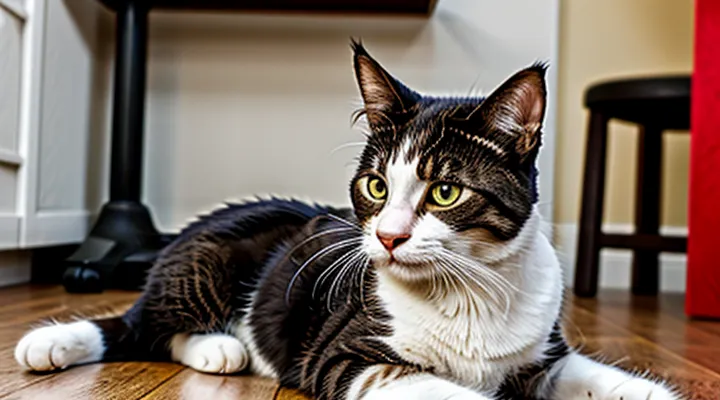
1. Recognizing the Signs of Choking
1.1 Behavioral Cues
When a cat is obstructed by a bone, rapid recognition of distress signals can determine the outcome.
- Gasping or labored breathing, often accompanied by audible choking sounds.
- Sudden cessation of normal panting, with the animal appearing to struggle for air.
- Pawing at the mouth or throat, indicating an attempt to dislodge the blockage.
- Drooling or excessive saliva, sometimes foamy, suggesting inability to swallow.
- Restlessness, pacing, or frantic attempts to escape confinement, reflecting panic.
- Dilated pupils and a fixed, focused stare, a physiological response to hypoxia.
These behaviors emerge within seconds of airway compromise. Absence of normal eating patterns, combined with any of the listed signs, warrants immediate intervention. Prompt assessment prevents prolonged oxygen deprivation and reduces the risk of permanent damage.
1.2 Physical Symptoms
A cat that has lodged a bone in its airway will display unmistakable physical signs. Rapid, noisy breathing indicates partial obstruction, while complete blockage produces silent, shallow respirations or an absence of breath sounds. The animal may cough forcefully, often accompanied by gagging or retching as it attempts to dislodge the object. Visible distress includes pawing at the mouth or throat, excessive drooling, and drooping of the jaw. The neck may appear strained, and the cat might extend its neck forward in an effort to open the airway. Cyanotic discoloration of the gums or tongue, ranging from pale pink to bluish, signals insufficient oxygen. A sudden collapse, loss of consciousness, or unresponsiveness denotes a critical emergency requiring immediate veterinary intervention. Recognizing these symptoms promptly enables timely action to prevent fatal outcomes.
2. Immediate Actions to Take
2.1 Ensuring Your Safety
When a cat is struggling with a bone, your first priority is personal safety. Approach the animal calmly; sudden movements can provoke defensive bites. Keep your hands away from the cat’s mouth until you have a clear line of sight on the obstruction. If the cat appears agitated, pause and allow it to settle before attempting intervention.
Wear thick gloves or use a towel to create a barrier between your skin and the cat’s teeth. Position yourself beside the animal rather than in front, reducing the chance of a direct bite. If the cat is on a hard surface, place a soft blanket underneath to prevent injuries to both parties.
Before manipulating the airway, verify that you can see the bone. If visibility is limited, gently open the cat’s mouth with a finger wrapped in cloth, applying steady, moderate pressure to avoid causing the animal to lunge. Should the cat bite, release immediately, reassess the situation, and consider seeking professional help rather than persisting.
Maintain a clear exit route. In the event the cat becomes aggressive, be prepared to step back and call a veterinarian or animal emergency service. Ensure the area is free of obstacles that could cause you to lose balance while assisting.
Safety Checklist
- Assess the cat’s demeanor; wait for calmness.
- Use protective gloves or a folded towel.
- Approach from the side, not head‑on.
- Secure a soft surface beneath the animal.
- Open the mouth with a cloth‑covered finger; avoid direct hand exposure.
- Have a backup plan: veterinary assistance ready if the cat resists.
By adhering to these precautions, you minimize the risk of injury while maintaining the ability to act quickly if the obstruction must be removed.
2.2 Initial Assessment
When a cat appears to be obstructed by a bone, the first priority is a rapid visual and tactile evaluation. Observe the animal’s breathing, vocalizations, and behavior. Silent, panicked, or distressed cats often display open‑mouth breathing, gagging, pawing at the mouth, or an inability to swallow. Check for visible protrusion of bone fragments in the oral cavity; if the object is partially exposed, note its size and location without attempting removal.
Next, assess the airway patency. Place a hand gently over the cat’s throat to feel for airflow while listening for stridor or harsh breathing sounds. A lack of audible respiration indicates a complete blockage and requires immediate intervention. If the cat is still producing some breath, the obstruction may be partial, but the situation remains critical.
Finally, evaluate the cat’s consciousness and pulse. A responsive animal with a detectable femoral pulse suggests circulation is still intact, whereas loss of consciousness or absent pulse signals imminent danger and the need for emergency measures such as back blows or a Heimlich‑type maneuver. Document the findings succinctly before proceeding to corrective action.
3. Basic First Aid Techniques
3.1 The Heimlich Maneuver (Modified for Cats)
When a feline patient inhales a bone fragment, immediate intervention can prevent airway obstruction and tissue damage. The modified Heimlich maneuver for cats is the primary emergency technique endorsed by veterinary professionals.
Procedure
- Assess the situation - Verify that the cat is unable to breathe, cough, or swallow. Look for signs such as pawing at the mouth, gagging, or cyanotic gums.
- Position the animal - Lay the cat on its side with the spine aligned horizontally. If the cat is small enough, hold it upright against your chest, supporting the rear legs with one hand.
- Locate the abdomen - Identify the area just behind the ribs, near the diaphragm. This point corresponds to the lower rib cage in a cat.
- Apply thrusts - Using the heel of your hand, deliver a quick, upward thrust toward the diaphragm. Aim to create a sudden increase in intrathoracic pressure that forces the foreign object upward.
- Repeat as needed - Perform up to five thrusts, checking after each attempt whether the bone has been expelled or the cat resumes normal breathing.
- Observe the outcome - If the cat coughs vigorously and expels the obstruction, keep it calm and monitor for residual distress. If breathing remains compromised, proceed to the next emergency step.
Follow‑up actions
- Emergency veterinary care - Even after successful removal, transport the cat to a clinic for a thorough examination to rule out esophageal injury or aspiration pneumonia.
- Post‑procedure monitoring - Watch for persistent drooling, retching, or lethargy. Document any abnormal respiratory sounds and report them to the veterinarian.
- Preventive advice - Avoid giving cats bones or hard treats. Opt for commercially formulated feline diets that eliminate choking hazards.
The modified Heimlich maneuver must be executed swiftly and precisely; hesitation can worsen hypoxia. Practitioners should practice the technique under veterinary supervision to ensure competence before an emergency arises.
3.1.1 Positioning the Cat
When a cat is obstructed by a bone, the first physical maneuver involves securing the animal in a safe, controlled posture. Place the cat on a flat surface, such as a table or the floor, and gently turn it onto its side. Align the spine horizontally to prevent the animal from rolling, then support the head with one hand while the other hand stabilizes the thorax. This lateral position opens the airway and allows clear visual assessment of the oral cavity.
If the cat resists, hold the forelimbs against the chest to limit movement. Apply light pressure to the back near the ribs, encouraging the cat to remain still without causing distress. Keep the neck slightly extended, avoiding excessive flexion that could worsen the blockage. The extended neck aligns the trachea and reduces the risk of further impaction.
The final positioning step prepares the cat for subsequent interventions, such as back blows or abdominal thrusts. Ensure the animal’s body is immobilized, the head is elevated, and the airway is as unobstructed as possible before proceeding with rescue techniques.
3.1.2 Applying Abdominal Thrusts
When a cat is obstructed by a bone, immediate intervention can prevent fatal airway compromise. The abdominal thrust, often called the feline Heimlich maneuver, is the primary rescue technique once the cat is unable to breathe, cough, or swallow.
-
Assess the situation. Confirm that the cat shows signs of choking: silent gagging, pawing at the mouth, or collapse. Do not attempt to retrieve the object with fingers if the cat is unconscious; this may push the bone deeper.
-
Position the cat. For a standing or sitting cat, place it on its side with the back against your body. For a cat lying on its back, roll it onto its side. Ensure the head is slightly elevated to keep the airway open.
-
Locate the thrust point. Place one hand just below the ribcage, at the diaphragm level, on the ventral side of the abdomen. The thumb should rest against the cat’s sternum, while the fingers support the lower ribs.
-
Deliver the thrust. Apply a quick, upward thrust toward the cat’s head. The motion should be firm but controlled, using the weight of your forearm to generate force. Perform up to five thrusts, checking after each attempt whether the bone has been expelled.
-
Re‑evaluate. If the bone emerges, clear the airway of any remaining fragments and examine the cat’s mouth for damage. If breathing does not resume after five thrusts, proceed to back blows: hold the cat in a secure position, strike the upper back between the shoulder blades with the heel of your hand three times, then repeat the abdominal thrust sequence.
-
Seek veterinary care. Even if the obstruction clears, the cat may have sustained internal injury or aspiration. Transport the animal to a veterinarian promptly for a thorough examination.
Safety notes: Do not apply thrusts to kittens under two months, as their ribs are fragile. Use the smallest effective force to avoid organ rupture. Maintain calm composure; rapid, decisive action increases the likelihood of a successful outcome.
3.2 Finger Sweep (Caution Advised)
When a cat is obstructed by a bone, the finger sweep may be considered only after confirming that the airway is not clear with a visual inspection. This maneuver involves inserting a finger into the cat’s mouth to locate and remove the foreign object. Because the cat’s airway is small and the animal may reflexively bite, extreme caution is mandatory.
- Position the cat on its side or in a gentle supine posture, securing the head to prevent movement.
- Open the mouth with a gentle, controlled grip on the upper jaw; avoid applying force to the teeth.
- Insert the index finger slowly, feeling for the bone. If the object is palpable, grasp it with the fingertip and pull outward in a straight line.
- Release the mouth immediately after removal and assess breathing. If the cat resumes normal respiration, monitor for signs of distress.
If the bone cannot be felt, or resistance is met, discontinue the sweep. Continued attempts increase the risk of injury to the tongue, teeth, or airway, and may provoke a bite. In such cases, proceed to emergency veterinary care without delay.
Key precautions:
- Keep nails trimmed to reduce tissue damage.
- Wear a protective glove to shield the hand.
- Do not use excessive force; a shallow, deliberate motion is sufficient.
- Have a rescue plan ready: a phone number for an emergency animal clinic and a transport carrier within reach.
The finger sweep is a last‑resort technique. Successful outcome depends on swift visual assessment, gentle execution, and immediate veterinary intervention when the maneuver fails.
3.2.1 Opening the Mouth
When a cat is obstructed by a bone fragment, rapid intervention can prevent fatal airway loss. The first maneuver is to open the animal’s mouth and expose the oral cavity for visual assessment and removal of the foreign object.
- Position the cat on a stable surface, preferably a non‑slippery table. Secure the torso with one hand, applying gentle pressure against the chest to limit movement.
- With the opposite hand, place the thumb on the upper jaw behind the canine teeth and the index finger on the lower jaw. Apply steady downward force to separate the incisors, creating a clear opening.
- Inspect the interior for visible bone pieces. If the obstruction is reachable, grasp it with fine forceps or tweezers, pulling it outward while maintaining mouth separation.
- If the object cannot be seen or retrieved, keep the mouth open while proceeding to back‑blow or abdominal thrust techniques, as outlined in the subsequent emergency protocol.
Maintain the cat’s head slightly elevated to assist drainage and keep the airway aligned. After removal, monitor breathing for at least five minutes; if irregularities persist, seek veterinary assistance immediately.
3.2.2 Visualizing the Obstruction
When a feline patient appears to be struggling for air after ingesting a bone fragment, the first priority is to confirm that an obstruction is present. Visual inspection provides the quickest confirmation and guides subsequent intervention.
Open the mouth gently but firmly. Use a gloved finger to lift the upper lip, exposing the incisors and the back of the oral cavity. Apply a focused beam of light-preferably a handheld LED flashlight-to illuminate the throat. Look for any visible piece of bone lodged between the teeth, on the palate, or protruding from the epiglottis. If the object is partially exposed, note its size, shape, and exact location.
If the obstruction is not immediately apparent, adjust the cat’s head to a slightly extended position. This alignment straightens the airway, allowing a clearer view of the laryngeal opening. Observe the soft palate and the ventral surface of the tongue for hidden fragments. In cases where the bone is embedded deeper, the obstruction may manifest as a silhouette against the light, indicating a shadowed blockage.
When the visual assessment reveals a reachable fragment, attempt removal with sterile tweezers or forceps, taking care to avoid pushing the object further down. If the piece is embedded in the tongue or throat tissue, do not apply excessive force; instead, prepare for immediate veterinary assistance.
Should the visual inspection fail to locate the obstruction but the cat continues to exhibit distress-gagging, pawing at the mouth, or cyanotic gums-assume a concealed blockage and proceed to emergency airway management, including back blows and chest compressions, before transport to a professional.
Key points for successful visualization:
- Use adequate lighting and a calm environment.
- Position the head to open the airway.
- Examine the oral cavity, palate, and laryngeal area systematically.
- Record the obstruction’s characteristics before removal.
- Escalate to professional care if removal is unsafe or ineffective.
4. When to Seek Veterinary Help
4.1 After Successful Dislodgement
After the obstruction is removed, the cat’s condition must be evaluated without delay. Observe breathing pattern; any wheezing, coughing, or labored respiration signals residual irritation or partial blockage. Check the mouth and throat for bleeding, swelling, or remaining fragments. If the animal appears disoriented, lethargic, or displays abnormal behavior, treat it as a potential secondary injury.
- Keep the cat in a quiet, low‑stress environment.
- Offer a small amount of fresh water after a few minutes; monitor for gagging or refusal.
- Provide a light, easily digestible snack (e.g., canned kitten food) only if swallowing is normal.
- Record the time of the incident, the actions taken, and any observed symptoms.
- Contact a veterinarian within the hour, even if the cat seems stable, to rule out internal trauma or airway inflammation.
Veterinary assessment should include a physical exam, possible radiographs, and observation for delayed complications such as aspiration pneumonia. Follow all professional recommendations regarding medication, diet, and activity restriction during the recovery period. Continuous monitoring for the next 24 hours is critical; any deterioration-persistent coughing, drooling, or difficulty breathing-requires immediate emergency care.
4.2 If Choking Continues
When a cat’s airway remains blocked after the initial attempt to dislodge the bone, immediate, decisive action is required. The following protocol, based on veterinary emergency standards, should be executed without hesitation.
- Verify that the cat is still unable to breathe: observe for silent coughing, gagging, or an absence of airflow despite open mouth.
- Call a veterinary emergency service at once. Provide precise details-species, size, suspected foreign object, and current symptoms-to allow the clinic to prepare appropriate equipment.
- While waiting for professional assistance, continue to apply back blows. Position the cat on its right side, support the thorax with one hand, and deliver firm, downward strikes between the shoulder blades with the heel of the other hand. Perform 5‑7 blows, reassessing after each set.
- If back blows fail, attempt a modified Heimlich maneuver. With the cat standing or lying on its side, place a thumb and forefinger just behind the rib cage, compressing upward and forward in a quick thrust. Execute 3‑5 thrusts, monitoring for any movement of the obstruction.
- Do not attempt blind finger sweeps; inserting fingers can push the bone deeper and cause additional injury.
- Maintain the cat’s head lower than its torso to promote drainage of any vomitus or saliva, reducing the risk of aspiration.
- Keep the animal’s airway as clear as possible: gently wipe excess saliva, but avoid excessive handling that may increase stress.
- If the cat becomes unconscious, initiate cardiopulmonary resuscitation (CPR) while continuing attempts to clear the airway. Deliver chest compressions at a rate of 100‑120 per minute, interspersed with rescue breaths, and repeat back blows and Heimlich thrusts between cycles.
- Once professional help arrives, provide a concise hand‑over report: time of choking onset, interventions performed, and the cat’s response.
Prompt escalation to veterinary care, combined with persistent, controlled airway clearance techniques, maximizes the chance of survival when choking does not resolve after the first effort.
4.3 Post-Choking Complications
As a veterinary professional with extensive experience in emergency feline care, I emphasize that the period following a choking episode demands vigilant observation and prompt intervention to prevent secondary health threats.
Airway trauma is common after a bone obstructs the trachea. Bruising, lacerations, or cartilage fracture can cause persistent coughing, noisy breathing, or blood‑tinged sputum. Immediate re‑examination of the airway, possibly with endoscopy, confirms the extent of damage and guides treatment.
Aspiration of bone fragments or saliva often leads to pneumonia. Signs include fever, lethargy, rapid breathing, and nasal discharge. Radiographic imaging and bronchoalveolar lavage help differentiate infectious from inflammatory processes, allowing targeted antibiotic therapy.
Esophageal injury may occur when a bone passes through the throat. Perforation, ulceration, or muscular spasm can result in dysphagia, regurgitation, or neck pain. Contrast studies or endoscopic inspection identify lesions; conservative management with fluid therapy and anti‑inflammatory medication is appropriate for minor injuries, while surgical repair is required for full‑thickness perforations.
Edema of the upper airway can develop hours after the initial event, narrowing the lumen and risking recurrent obstruction. Administration of corticosteroids and humidified oxygen reduces swelling and supports breathing.
Stricture formation is a delayed complication of mucosal damage. Progressive difficulty swallowing, weight loss, and drooling signal this condition. Dilatation procedures or stent placement restore patency.
To monitor for these complications, caregivers should record temperature, respiratory rate, appetite, and behavior at least twice daily for the first 48 hours. Any deviation from baseline warrants immediate veterinary assessment. Follow‑up appointments, typically scheduled within 24-48 hours, allow re‑evaluation of imaging, airway patency, and overall recovery.
Implementing a structured post‑choking protocol-airway inspection, imaging, antimicrobial coverage, anti‑inflammatory therapy, and scheduled rechecks-minimizes morbidity and promotes swift return to health.
5. Preventing Choking Incidents
5.1 Dietary Precautions
When feeding a cat, the risk of airway obstruction can be minimized through strict dietary controls. Avoid offering any type of bone, whether raw, cooked, or processed; even small fragments can lodge in the trachea or esophagus. Select commercial cat food that meets AAFCO nutritional standards and is free of hard, indigestible pieces. If you choose to give treats, opt for soft, pliable products that dissolve quickly in the mouth. Monitor portion size to prevent rapid ingestion that may force large chunks into the throat.
Key precautions:
- Eliminate all bones from the cat’s diet, including chicken, fish, and rabbit remnants.
- Provide only chewable items specifically designed for felines, such as dental treats with a smooth texture.
- Slice or grind any fresh meat into bite‑size pieces no larger than a pea to ensure easy swallowing.
- Store food in sealed containers to preserve freshness and avoid accidental contamination with bone fragments.
- Observe the cat during meals; intervene immediately if the animal attempts to swallow a hard object.
Implementing these measures reduces the likelihood of choking incidents and promotes safer feeding habits.
5.1.1 Avoiding Bones
As a veterinary specialist, I emphasize that preventing bone ingestion is the most reliable method to eliminate choking incidents in felines. Bones, especially cooked or small fragments, can become lodged in the airway or cause trauma to the esophagus. The following practices reduce exposure to hazardous bone material:
- Offer only commercially formulated cat foods that are free of bone particles.
- If raw meat is served, trim all visible bone fragments and discard any residual cartilage.
- Supervise meals that include fish; remove every spine and rib before presenting the flesh.
- Avoid sharing table scraps that contain chicken or pork bones, even if they appear soft.
- Store treats in sealed containers to prevent accidental inclusion of bone pieces.
Selecting appropriate protein sources eliminates the primary choking hazard. When a cat’s diet consists exclusively of boneless options, the likelihood of airway obstruction drops dramatically, removing the need for emergency intervention.
5.1.2 Safe Treats
When a cat experiences a blockage from a bone fragment, prevention begins with selecting treats that cannot become hazardous. Safe treats are defined by size, texture, and composition that eliminate the risk of airway obstruction.
- Choose treats that dissolve or soften quickly in saliva; soft‑chew varieties and freeze‑dried meats meet this criterion.
- Avoid any product containing hard bones, cartilage, or mineralized fragments larger than a pea.
- Offer pieces no bigger than the cat’s width at the jawline; a safe size fits comfortably between the forepaws.
- Prefer treats made from single‑ingredient proteins to reduce the chance of hidden bone particles.
- Inspect each treat for splintered edges before feeding; discard any that appear cracked or uneven.
Store treats in airtight containers to maintain freshness and prevent moisture‑induced hardening, which can transform a soft snack into a choking hazard. Rotate inventory regularly; older items should be removed before they become brittle.
If a treat is inadvertently given and the cat shows signs of distress-gagging, pawing at the mouth, or labored breathing-initiate emergency protocols immediately. The prevention strategy outlined here reduces the likelihood of such incidents and supports overall feline health.
5.2 Supervising Play
Supervising play is the most reliable method to prevent a feline from inhaling a bone fragment. Continuous visual monitoring while the cat engages with toys or treats eliminates the need for emergency intervention. Keep the play area free of small, hard objects that could be mistaken for prey. When offering a bone, select a size appropriate for the cat’s jaw and limit chewing time to a few seconds. Replace the bone with a soft chew if the cat shows signs of frustration or attempts to swallow large pieces.
If a choking incident occurs, immediate action is required:
- Assess the cat’s airway; look for visible obstruction.
- If the bone is visible at the mouth opening, gently open the jaw and remove it with tweezers.
- If the object is not visible, perform a feline Heimlich maneuver: place the cat on its side, locate the space just behind the rib cage, and apply firm, upward pressure.
- After expelling the obstruction, check breathing. If the cat remains silent or shows distress, transport to a veterinary clinic without delay.
Regular supervision also involves rotating toys to maintain interest and prevent the cat from fixating on inappropriate objects. Record the cat’s behavior during each session; patterns of aggressive chewing may indicate a need for alternative enrichment. By integrating vigilant oversight with rapid response techniques, owners can safeguard their pets against choking hazards while preserving an engaging play environment.
5.3 Safe Toy Selection
When selecting play items for cats, prioritize designs that eliminate choking hazards. Choose toys whose dimensions exceed the animal’s mouth opening; a safe minimum is twice the length of the cat’s jaw. Materials should be non‑breakable and resistant to tearing; silicone, solid rubber, and tightly woven fabric meet these criteria better than plush or cardboard. Avoid products with detachable components such as squeakers, bells, or loose strings, because they can be swallowed unintentionally.
Inspect every toy before purchase. Verify that seams are reinforced, stitching is tight, and no loose threads are present. Prefer items with a single, solid construction rather than multi‑piece assemblies that could separate under pressure. For cats that chew aggressively, opt for reinforced chew toys specifically marketed for strong bites; these typically use dense polymers that do not splinter.
Maintain a regular inspection schedule. Discard any toy showing signs of wear, cracks, or frayed edges. Replace damaged items promptly to prevent accidental ingestion. Keep a log of the toys in use and their condition, especially for indoor cats that have continuous access.
A concise checklist for safe toy selection:
- Size: larger than the cat’s mouth opening, at least double the jaw length.
- Material: non‑breakable, tear‑resistant (silicone, solid rubber, tightly woven fabric).
- Construction: no detachable parts, reinforced seams, no loose threads.
- Durability: rated for strong chewers if the cat exhibits aggressive biting.
- Maintenance: regular visual inspection, immediate removal of damaged toys.
By adhering to these standards, owners reduce the likelihood of respiratory obstruction caused by accidental ingestion of toy fragments, complementing emergency response plans for choking incidents.