
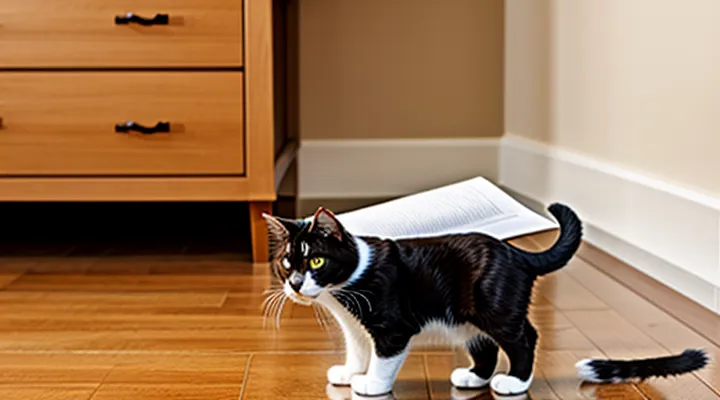
Introduction
What Makes a Cat a Genius?
Assessing feline intelligence requires observable behaviors that indicate problem‑solving ability, adaptability, and social awareness. An expert observes patterns rather than isolated incidents, focusing on consistency across contexts.
Key indicators of a highly intelligent cat include:
- Rapid mastery of new tricks or puzzles, such as opening cabinets or manipulating treat dispensers.
- Ability to navigate complex environments, demonstrated by finding hidden routes or escaping confinement without assistance.
- Use of learned signals to communicate needs, for example, pressing a button to request food or alerting owners to unusual sounds.
- Recognition of cause and effect, evident when the cat predicts outcomes of its actions, such as timing a jump to catch a moving toy.
- Flexible response to novel situations, adjusting behavior when faced with unfamiliar objects or changes in routine.
Cognitive tests designed for cats, such as maze navigation or object permanence tasks, provide quantitative data. High scores correlate with the traits listed above and suggest an elevated level of reasoning.
Long‑term observation of these behaviors, combined with structured testing, offers a reliable method for identifying a cat that exhibits genius‑level intellect.
The Misconception of Cat Intelligence
Cats are frequently portrayed as inscrutable or lazy, yet scientific research reveals a far more nuanced picture of their cognitive abilities. Misinterpretations arise from anthropomorphic assumptions, limited observational methods, and selective reporting of anecdotal behavior.
Common myths include:
- Instinctive laziness: The belief that a cat’s frequent rest periods indicate low mental activity. In reality, felines conserve energy for short, intense bursts of hunting‑related tasks, which demand complex problem‑solving.
- Lack of social intelligence: The idea that cats cannot form social bonds or understand human cues. Studies show cats can discriminate human facial expressions, respond to name calls, and adjust behavior based on owner mood.
- Simple stimulus‑response: The notion that cats react only to immediate stimuli without learning. Experiments with puzzle feeders demonstrate that cats can learn multi‑step solutions and retain strategies over weeks.
Assessing whether a cat displays exceptional intellect requires observable, measurable behaviors rather than whimsical interpretations. Reliable indicators are:
- Rapid adaptation to novel puzzles: Solving new mechanisms within a few attempts, indicating flexible learning.
- Consistent use of tools: Employing objects (e.g., using a stick to retrieve food) repeatedly across contexts.
- Complex communication: Initiating specific vocalizations or gestures to achieve a desired outcome, such as opening doors or requesting food.
- Long‑term memory retention: Remembering the location of hidden treats or the solution to a maze after extended intervals.
- Strategic planning: Anticipating future events, for example, positioning itself to intercept a moving toy before the owner releases it.
These criteria, grounded in experimental data, separate genuine high‑level cognition from popular stereotypes. By focusing on objective performance rather than anecdotal charm, owners can accurately evaluate the intellectual capacity of their feline companions.
Behavioral Indicators of a Genius Cat
Problem-Solving Skills
1. Unlocking Doors
Cats demonstrate problem‑solving abilities when they manipulate physical barriers. Observing how a feline approaches a closed door can reveal cognitive flexibility, memory, and spatial reasoning.
When a cat encounters a locked or latched door, a genius‑level animal will:
- Test multiple entry points rather than persisting with a single method.
- Use its paws to press handles, pull knobs, or push panels, adapting grip strength to the mechanism.
- Recall previous successful actions, such as turning a knob clockwise after a failed counterclockwise attempt.
- Anticipate the outcome of an action, pausing before applying force to gauge resistance.
- Combine visual cues with tactile feedback, adjusting approach when the door’s material changes (wood versus glass).
A cat that consistently repeats the same ineffective motion without variation likely relies on instinct rather than analytical thought. Conversely, a feline that experiments, learns from error, and eventually opens the barrier displays the hallmark of high intelligence.
To evaluate this trait, set up a controlled scenario: a room with a door that can be opened by a simple mechanism (e.g., a lever or push‑button). Record the cat’s behavior for several minutes, noting the number of distinct strategies employed and the time required to achieve entry. Shorter latency, diverse tactics, and successful manipulation indicate a superior problem‑solving capacity.
In summary, the ability to unlock doors serves as a practical metric for assessing feline intellect. Mastery of this task reflects adaptive learning, memory retention, and strategic planning-attributes associated with exceptionally clever cats.
2. Opening Cabinets
Observing a cat’s interaction with cabinets provides concrete data for evaluating problem‑solving ability, memory retention, and motor planning-key components of advanced feline cognition. When a cat repeatedly manipulates cabinet doors, hinges, or locks, it demonstrates an understanding of cause and effect that exceeds typical exploratory play.
The behavior can be broken down into measurable actions:
- Detects handle or latch orientation and applies appropriate pressure.
- Adjusts grip when the initial attempt fails, indicating flexible strategy use.
- Repeats successful technique after a delay, showing short‑term memory consolidation.
- Navigates to the cabinet without external cues, suggesting spatial awareness.
To assess these traits systematically, follow a three‑step protocol:
- Baseline recording - Place a closed cabinet with a visible latch within the cat’s usual environment. Use a camera to capture all attempts for at least 30 minutes. Note latency to first contact, number of attempts, and success rate.
- Variable manipulation - Alter the latch direction, add a simple lock, or reposition the cabinet. Record changes in approach, indicating the cat’s ability to generalize learned actions.
- Retention test - After a 24‑hour interval, re‑introduce the original cabinet configuration without prompting. Successful reopening at this stage confirms memory retention.
Cats that consistently solve these tasks, adapt to new mechanisms, and recall solutions after delays meet criteria associated with high cognitive performance. Incorporating cabinet‑opening observation into a broader assessment-such as puzzle‑box solving and interactive play-yields a reliable profile of feline intellect.
3. Retrieving Hidden Objects
When evaluating feline intelligence, the ability to locate concealed items offers a clear, measurable indicator. A cat that consistently retrieves objects hidden under varying conditions demonstrates problem‑solving capacity, memory retention, and sensory acuity-traits associated with higher cognitive function.
Begin by selecting a familiar, lightweight toy or treat. Place the object behind a transparent barrier (e.g., a clear plastic cup) for the first trial, then gradually increase the difficulty: hide it under an overturned bowl, inside a shallow box, or within a stack of folded towels. Record the latency between the cat’s initial approach and successful retrieval. Shorter latency across successive trials suggests rapid learning and adaptation.
Introduce a delay interval between hiding and release. After a 30‑second pause, present the cat with the same set of obstacles. Successful retrieval after the pause indicates short‑term memory retention. Extend the interval to several minutes on later attempts; consistent performance under longer delays points to more robust memory.
Vary the location of the hidden object across rooms. Use a consistent cue (e.g., a gentle tap on the floor) to signal the start of the search. Observe whether the cat employs systematic scanning, such as moving from left to right, or utilizes scent cues. Systematic patterns reflect strategic planning, while reliance on scent alone may indicate reliance on a single sensory modality.
Compile the data into a simple table:
- Trial type (transparent barrier, covered, multi‑layer)
- Delay before search (0 s, 30 s, 2 min)
- Retrieval latency (seconds)
- Success rate (%)
Analyze trends: decreasing latency and increasing success rate across trial types and delays support the conclusion that the cat possesses advanced problem‑solving abilities. Conversely, erratic performance or failure to improve suggests average or lower cognitive function.
By systematically applying these retrieval tests, an expert can differentiate between typical feline behavior and the hallmark signs of a truly gifted cat.
Communication Prowess
1. Complex Vocalizations
Complex vocalizations provide a reliable window into feline cognition. Cats that produce a wide repertoire of sounds-ranging from nuanced meows to chirps, trills, and low-frequency growls-demonstrate an ability to encode information beyond basic needs. When a cat modifies pitch, tempo, or intensity in response to specific stimuli, it signals an understanding of cause‑and‑effect relationships and a capacity for flexible communication.
Key characteristics of advanced vocal behavior include:
- Contextual variability - distinct sounds for greeting, requesting food, signaling discomfort, or indicating curiosity about an object.
- Acoustic precision - consistent replication of a particular tone when a specific outcome is desired, such as a particular pitch that elicits a treat from the owner.
- Mimicry and improvisation - occasional imitation of bird calls or human speech patterns, suggesting auditory learning and experimentation.
- Sequential structuring - combination of two or more vocal elements in a single utterance to convey a compound message, for example a short trill followed by a prolonged meow when a door is closed.
Observation of these patterns, especially when the cat adjusts its vocal output after trial and error, supports the hypothesis of higher-order problem solving. Documenting each instance-time, stimulus, and vocal response-allows owners to quantify the cat’s communicative sophistication and assess its intellectual potential with greater accuracy.
2. Advanced Body Language
Observing a cat’s subtle movements provides the most reliable clues about exceptional cognitive abilities. When a feline anticipates human actions, it displays precise, pre‑emptive body adjustments. For example, a cat that positions its paws on a keyboard before a user types is signaling an understanding of cause and effect beyond typical play behavior.
Advanced indicators include:
- Micro‑tail flicks that occur milliseconds before a decision point, such as a rapid, isolated flick just before a puzzle feeder is opened. This timing reflects predictive processing.
- Ear rotation patterns that align with auditory cues, where the cat swivels each ear independently to isolate sounds, suggesting sophisticated auditory discrimination.
- Pupil modulation synchronized with problem‑solving tasks; pupils dilate sharply at the moment of insight and contract quickly after a solution is reached, mirroring human “aha” responses.
- Complex paw gestures such as sequential tapping or drumming on surfaces to communicate specific requests, demonstrating intentional signaling rather than random play.
- Postural shifts that involve lowering the body while maintaining an alert head position, indicating focused attention on a challenging task without the usual signs of stress.
A cat that consistently exhibits these behaviors while navigating novel puzzles, manipulating objects, or interacting with humans demonstrates a level of reasoning comparable to that of highly trainable species. Monitoring these nuanced signals allows owners to differentiate ordinary curiosity from genuine intellectual prowess.
3. Understanding Human Speech
Understanding human speech is a critical indicator when assessing feline intelligence. Cats that consistently respond to verbal cues demonstrate a level of auditory processing beyond basic conditioning. Experts observe three core behaviors:
- Accurate reaction to specific words (e.g., “treat,” “no”) without visual prompts.
- Anticipation of tone changes, such as distinguishing a calm command from an urgent one.
- Ability to follow multi‑step verbal instructions, like “go to the mat and wait.”
These responses suggest the cat forms mental representations of human language patterns. Researchers measure latency between the spoken cue and the cat’s action; shorter intervals indicate stronger comprehension. Additionally, cats that adjust their behavior based on subtle vocal nuances-raising a paw when praised softly but remaining still when spoken sharply-exhibit sophisticated auditory discrimination.
Neuroscientific studies reveal that felines possess a well‑developed auditory cortex capable of decoding frequency and rhythm. When a cat consistently matches verbal commands with appropriate actions, it reflects cortical activation comparable to that seen in highly trainable species. Consequently, systematic observation of speech‑related behavior provides a reliable metric for identifying exceptionally perceptive cats.
Memory and Learning
1. Remembering Commands
Veterinary behaviorist Dr. Amelia Reed explains that a cat’s ability to retain verbal or gestural cues provides a reliable indicator of advanced cognition. When a feline consistently responds to a command after a delay, the behavior demonstrates memory consolidation, pattern recognition, and motivation-key components of problem‑solving intelligence.
Observable evidence includes:
- Delayed compliance: The cat obeys a command (e.g., “sit,” “come”) after being given the cue earlier in the day or the previous week, indicating retention beyond short‑term memory.
- Generalization: The animal applies the learned cue to similar situations, such as responding to “stay” when placed on a new surface or in a different room.
- Spontaneous execution: The cat initiates the commanded behavior without a prompt after having been trained, showing internalization of the rule.
- Selective response: The cat distinguishes between similar commands, executing the correct one even when presented in rapid succession.
- Contextual adaptation: The feline modifies the commanded action to suit environmental constraints, for example, jumping onto a higher perch when instructed to “jump” onto a low ledge.
To evaluate these traits, conduct a structured assessment:
- Teach a simple command using a consistent cue and positive reinforcement.
- Record the cat’s response latency during the initial training session.
- After a 24‑hour interval, present the same cue without reinforcement and note compliance.
- Repeat the test after 48‑72 hours, varying the location and adding minor distractions.
- Document any spontaneous or generalized responses over a two‑week period.
Consistent success across these steps signals that the cat possesses a robust memory for commands, a hallmark of elevated intelligence in felines.
2. Recognizing Faces and Names
Cats that consistently differentiate individual humans and respond to specific vocal cues demonstrate a level of cognitive processing that exceeds ordinary pet behavior. When a feline reliably distinguishes between owners, strangers, and even familiar animals, it reveals an advanced capacity for visual and auditory discrimination-key markers of higher intelligence.
Observing facial recognition involves a simple, repeatable protocol. Present the cat with two photographs of people it knows: one of the primary caregiver and one of a less familiar individual. Hold each image at eye level for a few seconds, then note the cat’s reaction. A genuine response-such as focused staring, ear twitching, or a brief vocalization-directed preferentially toward the familiar face indicates that the animal forms a stable mental representation of that person’s features.
Name recognition can be assessed with the following steps:
- Choose a distinct name for the cat and use it exclusively during feeding, play, and grooming sessions for at least one week.
- After the conditioning period, call the cat by its name while a different household member calls another animal by a different name.
- Record the cat’s response: immediate orientation, tail movement, or approach toward the caller suggests that the animal has associated the specific sound pattern with its own identity.
- To verify, repeat the test with the same name spoken by an unfamiliar voice; consistent reaction confirms that the cat’s recognition is linked to the acoustic pattern rather than the speaker’s identity.
Cats that display both reliable facial discrimination and robust name association are likely employing sophisticated neural pathways for social cognition. These behaviors, when observed repeatedly and under controlled conditions, provide strong evidence that the pet possesses intellectual abilities comparable to those of highly adaptive mammals.
3. Adapting to New Situations
Evaluating a cat’s capacity to adjust to unfamiliar environments provides a reliable indicator of advanced cognition. When a feline encounters a novel stimulus-such as a rearranged piece of furniture, an unexpected visitor, or a new type of toy-its response reveals problem‑solving ability, flexibility, and confidence in exploring.
High adaptability manifests through specific actions. Observers should look for:
- Immediate investigation rather than avoidance; the cat approaches the change within seconds.
- Rapid modification of established routines, for example, using a different route to a feeding area after a barrier is introduced.
- Persistent experimentation with new objects, such as attempting multiple methods to retrieve a hidden treat.
- Calm demeanor during prolonged exposure to the new element, indicating low stress and sustained focus.
Controlled assessments strengthen the observation. Introduce a single variable at a time-move a familiar perch, place a transparent container with a treat, or replace a regular feeding schedule. Record latency to approach, duration of interaction, and the variety of strategies employed. Consistent low latency and diverse tactics across several trials suggest a higher level of intelligence.
In summary, a cat that quickly embraces alterations, demonstrates flexible problem‑solving, and maintains composure under novelty likely possesses superior cognitive abilities. Monitoring these behaviors provides concrete evidence for identifying a particularly gifted feline.
Play and Curiosity
1. Engaging in Interactive Games
As a veterinary behaviorist, I assess feline cognition through observable responses during structured play. Interactive games provide measurable data because they require the animal to process information, make choices, and adjust strategies.
Typical games include:
- Puzzle feeders that release food after a sequence of manipulations.
- Hide‑and‑seek with toys or treats concealed under cups.
- Laser‑pointer chases that involve sudden direction changes.
- Clicker‑trained tasks where the cat must press a lever or push a button.
When a cat solves a puzzle quickly, repeats a successful action without prompting, or modifies its approach after a failure, these behaviors indicate advanced problem‑solving ability. Consistent memory of hidden locations across sessions suggests strong spatial recall. Rapid adaptation to altered rules-such as a new obstacle in a chase course-demonstrates flexibility, a hallmark of higher intelligence.
To evaluate a cat objectively, follow these steps:
- Introduce a novel puzzle and record the latency before the first successful attempt.
- Increase the complexity after the cat masters the initial level; note whether performance improves, declines, or remains stable.
- Conduct multiple trials over several days to differentiate learning from chance.
- Compare results with baseline data from average‑performing cats of the same breed and age.
Cats that exhibit low latency, high success rates across escalating challenges, and persistent engagement without signs of frustration are strong candidates for exceptional cognitive abilities.
2. Exploring New Environments
Observing a cat’s behavior when it encounters unfamiliar surroundings provides reliable indicators of advanced cognition. An intelligent feline will demonstrate the following traits:
- Quickly assesses novel objects, distinguishing between safe and potentially hazardous items without hesitation.
- Navigates complex layouts-such as multi‑room apartments or outdoor gardens-by forming mental maps and recalling routes after a single exposure.
- Engages with new stimuli through purposeful experimentation, for example, testing how a closed door reacts to paw pressure before attempting to open it.
- Shows sustained curiosity, repeatedly returning to an unexplored area to gather additional information rather than abandoning it after a brief glance.
These actions reflect problem‑solving capacity, spatial memory, and a willingness to learn from experience-core components of high feline intelligence. Regularly introducing controlled, varied environments and recording the cat’s responses allows owners to differentiate ordinary curiosity from the systematic, analytical approach characteristic of a genius cat.
3. Demonstrating Strategic Play
Observing a cat’s ability to plan ahead while playing offers a reliable indicator of advanced cognition. When a feline selects a toy, assesses the environment, and then executes a sequence of actions to achieve a goal, it demonstrates strategic thinking. A cat that pauses to evaluate obstacles, chooses the most efficient route, and adjusts its tactics after an unsuccessful attempt shows problem‑solving skills comparable to those found in highly intelligent animals.
Key behaviors to watch for:
- Initiating a multi‑step play routine, such as positioning a ball near a doorway before pushing it to trigger a reaction from a human or another pet.
- Modifying the approach after a failed attempt, for example, switching from a direct swipe to a calculated bounce off a surface.
- Using objects as tools, like dragging a string to create a pulley effect that lifts a toy out of reach.
- Anticipating a partner’s response, such as timing a pounce to coincide with a human’s hand movement, indicating an understanding of cause and effect.
These patterns reveal that the cat is not merely reacting reflexively but is evaluating options, forecasting outcomes, and executing a chosen plan. Consistent display of such strategic play strongly suggests a level of intelligence that surpasses typical feline behavior.
Physical Traits Associated with Intelligence
Eye Contact and Focus
Observing a cat’s eye contact and sustained focus provides reliable insight into cognitive capacity. When a feline maintains steady gaze during interactive tasks-such as tracking a moving toy or following a human hand-its visual attention demonstrates purposeful processing rather than reflexive reaction.
Key behaviors to monitor include:
- Direct, uninterrupted stare at a problem‑solving scenario (e.g., a puzzle feeder) lasting several seconds.
- Ability to shift gaze between multiple objects without losing track, indicating flexible attention.
- Quick re‑engagement after a brief distraction, showing resilient concentration.
A cat that consistently exhibits these patterns is likely employing higher‑order mental strategies. Frequent, purposeful eye contact during training sessions suggests the animal anticipates outcomes and adapts behavior, hallmarks of advanced intellect.
Agility and Coordination
As an experienced feline behavior specialist, I assess a cat’s intellectual capacity by observing how it manages physical challenges. Agility and coordination provide measurable evidence of problem‑solving skills, spatial awareness, and learning speed.
A cat that consistently navigates obstacles demonstrates rapid information processing. When presented with a new climbing structure, a genius‑level cat will:
- Test footholds before committing weight.
- Adjust body posture to maintain balance on narrow ledges.
- Execute precise jumps without hesitation.
Fine motor control further reveals cognitive depth. During play with interactive toys, a highly intelligent cat will:
- Manipulate objects to trigger mechanisms, such as releasing a ball from a puzzle feeder.
- Sequence actions, for example, pulling a lever before opening a door.
- Adapt techniques after failed attempts, indicating flexible thinking.
Observation of gait patterns also matters. A cat that can alter stride length to squeeze through tight spaces or change direction mid‑air shows advanced proprioception. These behaviors correlate with higher learning rates and the ability to generalize solutions across different contexts.
In summary, consistent excellence in navigating complex environments, manipulating objects purposefully, and adjusting movement strategies are strong indicators that a cat possesses superior mental abilities.
Grooming Habits
Cats that consistently display sophisticated grooming behavior often reveal higher cognitive abilities. An expert observer notes the following patterns:
- Precise self‑inspection: the cat pauses to examine its own paws, ears, and tail, adjusting posture to reach difficult spots. This indicates spatial awareness and body mapping.
- Tool use: the animal manipulates brushes, leaves, or toys to aid cleaning, demonstrating the ability to select and employ external objects for a specific purpose.
- Sequence planning: the cat follows a reproducible order-starting with face, moving to front limbs, then hindquarters-rather than random strokes, suggesting memory of an efficient routine.
- Adaptive response to obstacles: when a grooming obstacle appears (e.g., a knot in fur), the cat experiments with different angles or paw positions until the issue resolves, reflecting problem‑solving skills.
- Social grooming imitation: the cat mirrors the grooming techniques of other cats it observes, showing capacity for observational learning.
These behaviors, when consistently present, provide reliable evidence of advanced mental processing in felines.
Testing Your Cat's Intelligence
Simple Home Tests
1. The Shell Game
As a feline cognition specialist, I evaluate intelligence through controlled problem‑solving tasks. The shell game offers a reliable metric for assessing a cat’s capacity to track hidden objects, infer patterns, and adapt strategies.
The procedure consists of three identical cups and a small treat. Place the treat beneath one cup while the cat watches. Shuffle the cups rapidly in a predictable sequence, then allow the cat to choose. Record the choice, repeat the trial ten times, and vary the shuffle direction after each set.
Key observations:
- Immediate correct selection in more than 70 % of trials suggests advanced spatial memory.
- Consistent improvement across repetitions indicates learning ability.
- Ability to anticipate the shuffle pattern, demonstrated by selecting the correct cup before the final movement, signals forward planning.
Interpretation guidelines:
- 70 %‑80 % correct: high competence, comparable to trained working cats.
- 80 %‑90 % correct: exceptional problem solving, evidence of abstract reasoning.
- Above 90 % correct: rare level of insight, aligns with what is typically described as feline genius.
When a cat meets the highest tier, supplement the shell game with additional tasks-such as delayed retrieval and multi‑object tracking-to confirm sustained cognitive performance.
2. The Treat Puzzle
The treat puzzle offers a practical gauge of feline problem‑solving ability. By presenting a food reward inside a device that requires manipulation, you observe how quickly and creatively the cat accesses the treat. Consistent success, especially with novel configurations, suggests advanced cognitive processing.
To conduct the assessment, follow these steps:
- Choose a puzzle feeder with adjustable difficulty (e.g., sliding doors, rotating compartments).
- Place a small, highly valued treat in the most concealed compartment.
- Introduce the puzzle to the cat without demonstration; allow the animal to explore freely.
- Record the time taken to retrieve the treat and note the strategies employed (pawing, nudging, using the nose, problem‑solving sequences).
- Repeat the test with increased complexity after the cat masters the initial level; compare performance metrics across sessions.
Interpretation guidelines:
- Retrieval under 30 seconds on the first attempt indicates rapid learning and spatial reasoning.
- Use of multiple tactics or invention of new methods (e.g., rolling the device) signals flexible thinking.
- Repeated failure despite motivation may reflect lower problem‑solving aptitude rather than lack of interest.
By systematically varying puzzle difficulty and documenting outcomes, you obtain objective evidence of a cat’s intellectual capacity. This method aligns with established animal cognition research, providing a reliable indicator of genius‑level behavior in domestic cats.
3. The Obstacle Course
Assessing feline intellect often involves structured challenges that reveal problem‑solving capacity, adaptability, and memory. The obstacle course provides a controlled environment where a cat’s ability to navigate complex tasks can be measured objectively.
A well‑designed course includes three elements: physical barriers, detachable puzzles, and variable reward locations. Each element tests a distinct cognitive domain.
- Barrier navigation - measures spatial reasoning and motor planning. Observe whether the cat chooses the shortest route, attempts alternative paths, or hesitates excessively.
- Detachable puzzles - evaluate manipulation skills and cause‑effect understanding. Record the number of attempts required to release a concealed treat and whether the cat repeats successful actions without prompting.
- Variable reward placement - tests working memory. After a brief exposure to the reward’s location, hide the treat and note if the cat recalls the original spot or resorts to random searching.
Interpretation follows a simple rubric. Successful performance on at least two of the three elements, with minimal trial count and rapid adaptation after a failed attempt, indicates advanced cognition. Repeated failure across all elements suggests average or below‑average problem‑solving ability.
Implementing the course regularly, adjusting difficulty, and tracking progress over weeks yields reliable data. Consistent improvement signals learning, a hallmark of high intelligence, while stagnant results may reflect limited cognitive flexibility.
Observing Their Responses
When evaluating a cat’s intellectual capacity, the most reliable indicator lies in how the animal reacts to novel situations and problem‑solving challenges. An attentive observer can distinguish ordinary curiosity from advanced reasoning by focusing on specific response patterns.
First, note the speed and efficiency with which the cat manipulates objects to achieve a goal. A cat that consistently uses the shortest route, employs tools, or modifies its approach after a failed attempt demonstrates higher-order cognition. For example, when presented with a treat hidden under a sliding lid, a genius‑level cat will:
- Test the lid’s movement with a paw before applying force.
- Adjust grip strength to avoid breaking the container.
- Remember the successful technique for future trials.
Second, assess the animal’s ability to infer cause and effect beyond immediate stimuli. A cat that anticipates a human’s action-such as opening a door after hearing footsteps-shows predictive modeling. Observe whether the cat:
- Positions itself strategically before the expected event.
- Modifies behavior when the anticipated outcome changes (e.g., the door remains closed).
Third, evaluate social learning. Cats that replicate observed behaviors after watching another cat or a human solve a puzzle indicate observational intelligence. Document instances where the subject:
- Mirrors a technique demonstrated by a companion.
- Transfers a learned method to a different context (e.g., using a lever to open a separate container).
Finally, monitor adaptability under stress. An intelligent cat maintains composure, systematically explores alternatives rather than resorting to panic. Signs include:
- Systematic scanning of the environment for escape routes.
- Sequential testing of multiple solutions without repetitive failure.
Collecting quantitative data on these response categories-latency, success rate, method variation-provides a robust framework for distinguishing a truly gifted feline from a typical pet.
Encouraging Your Cat's Intellectual Growth
Providing Enrichment
Providing enrichment is a reliable metric for evaluating feline cognitive capacity. When a cat engages with complex stimuli, the speed and creativity of its responses reveal problem‑solving abilities, memory retention, and adaptability.
Introduce novel puzzles such as treat‑dispensing toys that require sequential actions. Record the number of attempts needed to access the reward and note any strategies that bypass the intended steps. Rapid mastery or improvisation indicates advanced reasoning.
Rotate interactive objects weekly. Include:
- Feather wands with variable motion patterns
- Laser pointers programmed with unpredictable trajectories
- Adjustable climbing structures with detachable platforms
- Food puzzles featuring multiple compartments and hidden triggers
Observe whether the cat explores each new configuration voluntarily, manipulates components without prompting, and retains learned solutions for future sessions. Consistent initiative and reduced latency to interaction suggest heightened intelligence.
Incorporate training sessions that link verbal cues to specific actions, such as “touch” for paw contact with a target. Track accuracy over successive trials. A cat that quickly associates the cue with the desired behavior demonstrates strong associative learning.
Document observations in a structured log: date, enrichment type, initial response time, number of successful attempts, and any novel behaviors. Comparative analysis across weeks highlights cognitive trends and distinguishes average performance from exceptional problem‑solving.
By systematically challenging a cat with varied, cognitively demanding enrichment, owners can objectively assess whether their feline exhibits genius‑level intellect.
Interactive Playtime
Interactive play sessions reveal a cat’s problem‑solving capacity, memory retention, and adaptability. When a feline engages with a puzzle toy, note the speed of discovery, the variety of strategies employed, and the willingness to modify tactics after failure. Rapid identification of hidden rewards, repeated use of the same successful method, and improvisation when obstacles change are strong indicators of advanced cognition.
Observe response to novel stimuli. Introduce a new toy that requires a sequence of actions-such as a ball that rolls only after a lever is pressed. A cat that experiments, isolates the functional component, and repeats the correct sequence demonstrates logical reasoning. Record the number of attempts needed to achieve the desired outcome; fewer attempts suggest higher intelligence.
Assess social learning during joint play. Demonstrate a trick, for example, guiding a feather wand through a specific pattern, then withdraw. A cat that replicates the pattern without further prompting shows the ability to internalize observed behavior. Repeat the demonstration with variations; consistent replication across changes signals cognitive flexibility.
Key behavioral markers to track during interactive sessions:
- Quick adaptation to altered toy mechanics
- Use of multiple distinct approaches to solve the same problem
- Retention of learned solutions over several days
- Ability to predict cause‑effect relationships in play scenarios
- Transfer of learned skills to different objects or contexts
Collect data over multiple sessions, noting consistency and progression. Cats that exhibit sustained improvement, display curiosity about new challenges, and apply learned concepts across diverse toys meet the criteria for exceptional mental acuity.
Consistent Training
Consistent training reveals a cat’s capacity for problem‑solving, memory, and adaptability-core indicators of high intellect. By applying the same cue, reward, and timing across multiple sessions, owners can differentiate fleeting curiosity from genuine learning ability.
A structured training routine should include:
- A single command (e.g., “touch”) paired with a distinct hand signal.
- Immediate positive reinforcement, such as a treat or click, delivered within one second of the correct response.
- Sessions limited to five minutes to maintain focus, repeated daily at the same time.
- Progressive difficulty: start with simple targets, then introduce obstacles, delayed rewards, or novel contexts.
When a cat reliably performs the task after several days, retains the behavior after a weekend break, and generalizes the command to new objects, these patterns suggest advanced cognitive processing. Conversely, inconsistent performance, reliance on immediate cues, or failure to transfer the skill indicates lower problem‑solving aptitude.
Monitoring progress through a brief log-date, cue, success rate-allows objective comparison over weeks. Cats that consistently achieve 80 % or higher accuracy across varied scenarios demonstrate the hallmark of a genius‑level feline.