
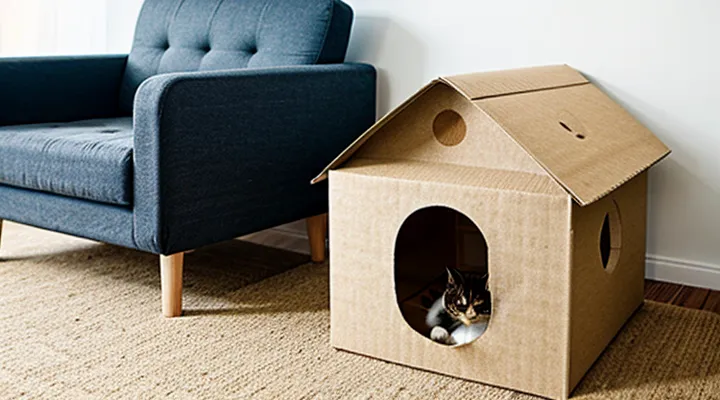
Introduction
Why Build a Cardboard Cat House?
Benefits for Your Cat
A well‑designed cardboard cat house offers several measurable advantages for feline health and behavior.
First, the material’s natural texture provides a tactile surface that encourages scratching, which helps maintain claw health and reduces the risk of overgrown nails. The low weight of cardboard allows the structure to be repositioned easily, enabling owners to place the shelter in optimal locations for sunlight, ventilation, or quiet corners, thereby supporting the cat’s need for environmental control.
Second, the insulating properties of corrugated cardboard create a stable microclimate. The air pockets retain warmth during cooler periods while allowing heat to dissipate when temperatures rise, reducing the cat’s exposure to extreme temperature fluctuations. Consistent thermal conditions contribute to lower stress levels and support metabolic stability.
Third, the enclosed space satisfies the cat’s instinctual preference for safe, hidden retreats. Access to a private den decreases anxiety, curtails excessive vocalization, and can mitigate destructive behaviors such as furniture scratching. A secure hideaway also provides a focal point for rest, promoting deeper, more restorative sleep cycles.
Key benefits can be summarized as follows:
- Claw maintenance: encourages natural scratching behavior.
- Thermal regulation: stabilizes temperature in the immediate environment.
- Stress reduction: offers a private, safe haven.
- Behavioral improvement: lessens unwanted activities and enhances rest quality.
Veterinary professionals affirm that incorporating a simple, cost‑effective cardboard shelter into a cat’s routine can positively influence physical health, emotional wellbeing, and overall quality of life.
Benefits for You
Creating a cardboard cat house delivers tangible advantages for the owner. The project uses inexpensive, readily available material, eliminating the need for costly pet furniture purchases. Reusing boxes reduces household waste, aligning personal habits with environmentally responsible practices. The construction process sharpens manual skills; cutting, folding, and securing cardboard enhances spatial reasoning and precision. Tailoring the design to a specific cat’s preferences yields a customized retreat, improving the animal’s comfort and reducing stress‑related behavior, which in turn simplifies household management. The finished structure is lightweight and portable, allowing relocation within the home without heavy lifting. Finally, the activity provides a creative outlet, offering personal satisfaction and a sense of accomplishment that extends beyond the functional result.
Materials You'll Need
Essential Supplies
When constructing a durable, comfortable feline retreat from corrugated cardboard, the choice of materials determines stability, safety, and longevity. The following items constitute the core inventory required for a professional‑grade cat house.
- Heavy‑wall cardboard sheets (minimum 5 mm thickness) - provide structural rigidity and resist collapse under weight.
- Box cutter or utility blade - enables precise cuts without tearing the material.
- Self‑adhesive or hot‑glue gun with sticks - secures joints, reinforces corners, and prevents accidental opening.
- Measuring tape or ruler - ensures accurate dimensions for entrance and interior space.
- Pencil or washable marker - marks cut lines for repeatable accuracy.
- Non‑toxic fabric or fleece (optional lining) - adds insulation and a soft surface for resting.
- Small wooden dowels or bamboo sticks - reinforce arches or tunnels that may experience repeated bending.
- Pet‑safe adhesive tape (paper or cloth) - offers temporary hold during assembly and reinforces high‑stress seams.
Each component serves a specific functional purpose: the thick cardboard forms the shell, the cutting tool creates clean openings, adhesives bind the structure, and supplemental materials enhance comfort and durability. By sourcing these supplies from reputable retailers and verifying that all adhesives are labeled non‑hazardous for pets, the builder eliminates health risks and achieves a finished product that withstands daily use.
Optional Decorative Items
When adding personality to a cardboard cat house, select decorative elements that do not compromise structural integrity or safety. Choose materials that are non‑toxic, lightweight, and easily replaceable.
- Fabric panels - attach a strip of breathable cotton or linen to the exterior for color variation; secure with hot‑glue dots to avoid loose threads.
- Paper cut‑outs - laser‑cut silhouettes of mice, fish, or paw prints; laminate briefly to increase durability and prevent tearing.
- Non‑slip tape - apply patterned anti‑slip strips around entryways; the texture provides grip for curious paws while adding visual contrast.
- Adhesive stickers - opt for removable vinyl stickers; they allow quick theme changes without damaging the cardboard surface.
- Miniature accessories - mount a small, sturdy wooden perch or a felt hammock inside; ensure all fixtures are anchored with interior staples to prevent collapse.
Maintain a balance between aesthetic appeal and functional design; excessive ornamentation can obstruct ventilation and reduce stability. Regularly inspect decorations for wear, replace damaged pieces, and keep the interior free of loose debris to preserve a safe environment for the cat.
Step-by-Step Instructions
1. Preparing the Box
1.1 Choosing the Right Box
When selecting a cardboard box for a feline retreat, prioritize dimensions, structural integrity, and material quality. The box should be large enough for the cat to turn around, stretch, and lie down comfortably-typically at least 12 × 12 × 12 inches for an average adult cat. Opt for double‑wall or heavy‑gauge corrugated cardboard; this resists collapse under the cat’s weight and reduces the need for frequent reinforcement. Avoid boxes with excessive moisture damage, torn flaps, or loose seams, as these compromise durability and safety. Preference should be given to boxes that have been stored in a dry environment, ensuring the fibers remain stiff and the surface stays clean.
Key selection criteria:
- Size: Minimum interior height of 12 inches; length and width sufficient for the cat’s body length plus extra space for movement.
- Thickness: Double‑wall or at least 0.25 inches thick; provides rigidity.
- Condition: No visible water stains, mold, or structural tears.
- Accessibility: One side that can be easily opened or cut to create an entrance without sharp edges.
By adhering to these parameters, the foundation of a sturdy, comfortable cat house is established, allowing subsequent modifications-such as insulation, ventilation, and decorative elements-to be applied with confidence.
1.2 Cleaning and Securing
When converting a cardboard box into a durable cat residence, the first priority is to eliminate contaminants and reinforce the structure.
Begin by removing any adhesives, tape residues, or food stains. Use a damp cloth with mild detergent, then wipe the interior and exterior surfaces. Allow the box to dry completely; residual moisture can weaken the fibers and attract mold.
After cleaning, inspect the box for weak seams, torn flaps, or crushed corners. Apply a thin layer of non-toxic glue or a strip of packing tape along each joint to prevent separation under the cat’s weight. For additional rigidity, insert a folded piece of cardboard or a lightweight wooden strip along the base and at the corners, securing it with hot‑glue or staples that are flush with the surface.
Finally, perform a quick safety check: ensure no sharp edges remain, all fasteners are embedded, and the interior is free of loose debris. A properly cleaned and secured box provides a safe, long‑lasting haven for the feline occupant.
2. Designing the Structure
2.1 Cutting the Entrance
Creating an appropriately sized entrance determines whether a cat can comfortably enter, exit, and use the shelter without stress. Measure the cat’s shoulder width and add roughly 2 cm to ensure clearance while preserving structural integrity of the box.
Steps for cutting the entrance
- Select a sturdy section of the cardboard, preferably the side wall opposite the intended sleeping area.
- Mark a rectangular opening: height equal to the cat’s shoulder height plus 1 cm, width matching the shoulder width plus 2 cm.
- Use a sharp utility knife; press the blade firmly to create a clean cut, avoiding ragged edges that could irritate the animal.
- Smooth the cut edges with a piece of sandpaper or a folded piece of cardboard to eliminate sharp points.
- Test the fit by guiding the cat through the opening; adjust by trimming a millimeter at a time if necessary.
A well‑executed entrance enhances the cat’s willingness to use the cardboard house and extends the structure’s durability.
2.2 Adding Windows (Optional)
When customizing a cardboard cat shelter, windows can improve ventilation and visual stimulation, though they remain optional. Assess the cat’s temperament and the intended placement of the house before cutting openings; a nervous feline may prefer a solid enclosure, while an active cat benefits from a view of the surroundings.
Select the window size based on the overall dimensions of the box. A rectangular cut of 2-3 inches (5-7 cm) on each side provides adequate airflow without compromising structural integrity. Larger openings increase the risk of collapse, especially if the box is thin or has been previously folded.
Prepare the cutouts with a sharp utility knife or box cutter. Follow these steps:
- Measure the desired window dimensions and mark them lightly with a pencil.
- Place the box on a stable surface; secure it with clamps or a second hand to prevent movement.
- Cut along the marked lines in a single, clean motion to avoid ragged edges.
- Trim any excess cardboard to create a smooth perimeter.
- Reinforce the edges with thin strips of tape or glue‑laminated flaps if additional strength is needed.
Optional glazing can be achieved by inserting a clear plastic sheet cut to the same size, securing it with tape. This protects the interior from drafts while preserving the view. Finally, verify that the windows do not interfere with any existing structural folds or seams; adjust as necessary to maintain the overall rigidity of the shelter.
2.3 Creating Multiple Levels (Advanced)
Creating a multi‑level cat house from a single cardboard box elevates comfort, encourages exercise, and maximizes space efficiency. The design must balance structural integrity with the natural inclination of cats to explore vertical surfaces.
Begin by measuring the box’s dimensions and sketching a tiered layout that fits within its footprint. Allocate at least 2 - 3 cm of overlap between each level to secure connections. Reinforce junctions with strong packing tape or low‑profile glue strips, ensuring that the load from a cat’s weight distributes evenly across the surfaces. Cut openings for entry and exit at each tier, positioning them slightly above the floor of the lower level to promote upward movement.
Construction steps
- Flatten the box and trim excess flaps, leaving a solid base of at least 5 cm thickness.
- Cut two rectangular platforms, each 1 cm shorter than the box’s width, to serve as intermediate floors.
- Attach the first platform to the interior walls using a continuous tape seam along the perimeter.
- Secure the second platform above the first, maintaining a vertical clearance of 8 - 10 cm, suitable for a cat’s stride.
- Reinforce the vertical supports by inserting folded cardboard ribs at each corner, taping them to both the walls and the platforms.
- Create access holes: a 7 cm circular opening on the side of the base, a 6 cm opening on the side of the middle level, and a 5 cm opening on the top tier.
- Cover all exposed edges with tape to prevent splinters.
After assembly, apply a non‑toxic, water‑resistant coating to protect the cardboard from moisture. Add a removable fabric liner to the top level for comfort and easy cleaning. Inspect the structure for loose seams before allowing the cat inside; reinforce any weak points immediately. Regularly replace worn sections to maintain safety and longevity.
3. Assembling the House
3.1 Reinforcing the Walls
Reinforcing the walls is essential for a durable cat house that withstands scratching and movement. Begin with double‑wall cardboard; its corrugated core adds stiffness compared to single‑wall stock. Cut each panel to the exact dimensions required for the floor, sides, and roof, then score the edges to ensure clean folds.
Secure the panels with high‑strength packing tape along every seam. Apply tape in a continuous strip that overlaps the joint by at least two inches on each side, then press firmly to eliminate bubbles. For additional rigidity, reinforce corners with triangular brackets made from scrap cardboard: fold a small right‑angled piece, glue it inside each interior corner, and tape over the exterior.
Consider adding internal ribs to the side walls. Measure the height of the panel, cut narrow strips (approximately 1 inch wide) from the same double‑wall material, and attach them vertically at 2‑inch intervals using hot‑glue or a hot‑glue gun. This grid pattern distributes pressure and reduces deformation when the cat leans or scratches.
Optional external coating enhances water resistance and structural integrity. Brush a thin layer of diluted PVA glue over the outer surfaces, allow it to dry, then repeat. The resulting film seals seams and adds a modest protective barrier without compromising breathability.
Key reinforcement steps
- Use double‑wall cardboard for all panels.
- Tape seams with overlapping strips (≥2 inches).
- Insert triangular cardboard brackets at each interior corner.
- Install vertical ribs spaced 2 inches apart on side walls.
- Apply two coats of diluted PVA glue to exterior surfaces.
Following these measures produces walls that retain their shape, resist damage, and provide a stable enclosure for the cat.
3.2 Attaching Additional Sections
When expanding a cardboard cat shelter, secure the new panels so the structure remains rigid and safe for the animal. Begin by measuring the existing frame; cut additional sections to match the height and width of the intended extension. Use a sharp blade and a ruler to ensure straight edges, which prevent gaps that could weaken the joint.
- Align the extra piece with the edge of the original box.
- Apply a thin strip of high‑strength packing tape along the contact line, covering at least three inches on each side.
- Press the tape firmly, smoothing out air bubbles with a fingertip or a flat tool.
- Reinforce the seam with a second tape layer oriented perpendicular to the first, creating a cross‑pattern that distributes stress evenly.
If the design includes a roof overhang or side windows, repeat the same procedure for each connection. For added durability, consider inserting a short wooden dowel or a sturdy cardboard brace inside the joint before taping; this internal support resists bending when the cat climbs or scratches.
Finally, inspect all seams for loose edges. Reinforce any compromised area with extra tape or a small dab of non‑toxic glue. A well‑attached extension preserves the shelter’s shape, extends its lifespan, and provides a comfortable, secure environment for the cat.
4. Decorating Your Cat's Abode
4.1 Safe Paints and Adhesives
When decorating a cardboard cat house, the choice of paint and adhesive determines durability and pet safety. Use products labeled non‑toxic, water‑based, and free of volatile organic compounds (VOCs). These formulations prevent harmful fumes and resist moisture without compromising the cardboard structure.
Select paints that meet the ASTM D-4236 standard for art materials intended for children and animals. Acrylics with a low‑odor profile and a dry‑to‑touch time of 15-30 minutes work well; they adhere to corrugated surfaces after a light sanding with 120‑grit paper. Apply two thin coats, allowing each layer to cure for at least two hours before handling.
Adhesives must bond without penetrating the cardboard fibers. Preferred options include:
- PVA glue (polyvinyl acetate) with a non‑solvent base, diluted 1:1 with water for a flexible seal.
- Silicone‑based sealant labeled food‑grade, applied sparingly to interior joints to prevent warping.
- Double‑sided tape made from polypropylene backing, ideal for attaching decorative panels without liquid exposure.
Before application, inspect all containers for expiration dates and storage integrity. Store paints and glues in a cool, dry place to maintain performance. After finishing, cure the entire structure for 24 hours in a well‑ventilated area; this eliminates residual odor and ensures the surface is fully set.
Finally, verify that no glossy or reflective finish remains on the exterior where cats might chew. A matte, low‑sheen topcoat reduces the risk of ingestion while preserving the aesthetic appeal of the cardboard shelter.
4.2 Adding Comfort Elements
When finalizing a cardboard cat house, comfort determines whether the feline will use the shelter consistently. Soft, insulated, and scent‑neutral elements should be integrated directly into the interior.
- Padding: Cut a piece of low‑pile fleece or microfiber fabric to fit the floor area. Secure it with a non‑toxic adhesive or staple strips, ensuring no exposed edges that could irritate paws.
- Insulation: Place a thin layer of reflective insulation or recycled foam between the box walls and the interior lining. This barrier retains heat in colder months and prevents condensation.
- Cushioning: Insert a small, washable pillow or a rolled towel at the back of the enclosure. Position it against the wall to create a supportive headrest.
- Scent masking: Lightly spray a pet‑safe, unscented fabric refresher on the interior fabric. This neutralizes cardboard odors without overwhelming the cat’s olfactory senses.
- Ventilation padding: Cut narrow slits near the top of the box and line them with breathable mesh fabric. The mesh maintains airflow while preserving the softness of surrounding surfaces.
Secure all additions with staples or hot‑glue that has cooled completely before allowing the cat inside. Regularly wash removable fabrics and replace worn padding to sustain a hygienic, inviting environment.
4.3 Personal Touches
When customizing a cardboard cat shelter, the goal is to reflect the owner’s aesthetic while preserving functionality. Choose materials that complement the home’s décor and the cat’s preferences.
- Apply a patterned wrapping paper or fabric to the exterior; secure with non‑toxic adhesive for durability.
- Cut decorative windows of varying sizes; line them with clear plastic to protect against moisture while allowing light.
- Attach a detachable blanket or cushion made from washable fleece; select a color that matches the room’s palette.
- Incorporate a small, scented sachet of dried lavender or chamomile near the entrance; ensure the scent is mild and safe for felines.
Personalization can also involve interactive elements. Install a lightweight pull‑string that releases a hidden tunnel, or mount a tiny bell on the door to signal entry. All additions should be lightweight, easy to replace, and free of sharp edges. By integrating these touches, the cardboard refuge becomes a distinctive piece that enhances both the cat’s comfort and the owner’s environment.
Tips for Success
Ensuring Stability
As an experienced designer of feline shelters, I focus on the structural integrity of any cardboard construction. A stable cat house prevents collapse under the animal’s weight, resists accidental tipping, and maintains its shape over repeated use.
- Select a double‑wall corrugated box; the additional layer adds rigidity.
- Cut the base to a square or rectangle that matches the intended floor area; avoid irregular shapes that create weak points.
- Reinforce the base with strips of cardboard glued or taped along each edge, forming a perimeter frame.
- Attach vertical side panels using strong packing tape on both the interior and exterior seams; overlapping joints by at least two inches distributes stress.
- Add cross braces inside the walls: cut narrow slats, position them diagonally or horizontally, and secure with tape or non‑toxic glue.
- Secure the roof to the side walls with a continuous tape strip that runs around the entire perimeter, preventing the top from lifting when the cat pushes against it.
- Place the finished unit on a flat, non‑slippery surface; if the floor is smooth, affix a thin rubber mat or apply non‑slip tape to the bottom.
After assembly, press down on each corner and side to verify that no flex occurs. Observe the cat’s interaction; if the structure shifts, add additional internal braces or increase tape coverage. Consistent reinforcement ensures the cardboard cat house remains functional and safe for prolonged use.
Cat-Friendly Features
Designing a cardboard cat house that meets a feline’s natural preferences requires attention to specific features. An expert builder should incorporate texture variety, secure entry points, and ventilation to create a comfortable, stimulating environment.
- Rough surfaces near the entrance encourage scratching and scent marking.
- A small, insulated nook offers warmth without overheating.
- Adjustable openings allow the cat to control exposure to light and airflow.
- Hidden compartments provide a sense of privacy and can hold toys or treats.
- Rounded edges reduce the risk of injury during play.
Placement of the structure influences its usefulness. Position the house near a quiet corner where the cat can observe activity without feeling threatened, yet remain accessible for quick retreats. Ensure the box rests on a stable surface to prevent tipping.
Materials should be sturdy yet lightweight. Double-layered corrugated cardboard improves durability, while a thin inner lining of non-toxic fabric adds softness. Seal any exposed seams with non-toxic glue to maintain structural integrity and prevent accidental ingestion of loose fibers.
Encouraging Your Cat to Use It
As a feline environment specialist, I focus on the behavioral steps that turn a cardboard shelter into a preferred retreat for your cat.
Place the structure where your cat already spends time. A spot near a sunny window, a favorite perch, or beside a feeding area increases the likelihood of exploration. Ensure the floor beneath the box is stable; a slipping base discourages entry.
Introduce the house gradually. Begin by leaving the door open and placing a thin blanket or a piece of your clothing inside. The familiar scent reduces anxiety and encourages investigation.
Offer incentives that link the shelter to positive experiences:
- Sprinkle a few dry treats along the entrance and interior.
- Position a soft toy or a small ball of catnip inside the box.
- Use a short session of gentle petting while the cat is near the opening.
Monitor the cat’s behavior for signs of acceptance. If the animal pauses at the threshold, pause and reward with a treat. Repeated short visits develop a habit; over time the cat will enter voluntarily and remain for extended periods.
Maintain the house’s appeal by keeping it clean and dry. Replace worn fabric, remove odors, and reinforce any torn flaps with tape. Regular upkeep signals that the shelter is a safe, reliable space, reinforcing the cat’s willingness to use it.
Customization Ideas
Themed Houses
Creating a cat house from a cardboard box can be elevated by applying the principles of themed design. A themed cat house not only satisfies a feline’s instinctual need for shelter but also adds visual interest to the living space. The following guidelines outline how to construct a functional, aesthetically coherent cat house that reflects a chosen theme.
- Select a box size that allows the cat to turn around comfortably; a minimum interior dimension of 12 × 12 × 12 inches works for most adult cats.
- Sketch the theme-castle, spaceship, igloo, etc.-and identify characteristic shapes (turrets, domes, control panels). Transfer the sketch onto the box using a ruler and a pencil.
- Cut openings according to the design: entrance doors, windows, and any thematic apertures. Use a utility knife and cut away excess cardboard, keeping edges smooth to avoid splinters.
- Reinforce structural elements with additional cardboard strips glued along seams; this prevents collapse under the cat’s weight.
- Apply decorative details: paint, colored paper, or printed stickers that match the theme. Use non‑toxic, water‑based paints for safety.
- Add interior comforts: a soft blanket, a small pillow, or a scratch‑friendly insert. Ensure all accessories are securely attached to avoid displacement.
- Secure the finished house to a stable surface with tape or brackets, preventing tipping.
The result is a durable, themed cat house that integrates functional shelter with creative expression. By following these steps, the builder delivers a tailored environment that engages the cat’s curiosity while maintaining structural integrity.
Multi-Cat Dwellings
As an experienced feline‑environment designer, I focus on creating cardboard structures that accommodate several cats simultaneously while preserving comfort and durability.
The first step is to select a box large enough to host multiple occupants. Choose a double‑wall carton with dimensions of at least 24 × 30 × 20 inches; this provides sufficient floor space and vertical room for climbing. Reinforce the bottom with a layer of tape to prevent sagging under weight.
Next, plan the interior layout. Divide the interior into distinct zones-sleeping platforms, hide‑aways, and play corridors. Use additional boxes or cardboard tubes to form shelves and tunnels, securing each joint with hot glue or packing tape. Ensure each platform is supported by at least two contact points to distribute load evenly.
Ventilation and odor control are essential. Cut several 2‑inch slits near the top edges of the structure, then line the openings with breathable mesh to allow airflow while keeping debris out. Place a thin layer of absorbent material, such as recycled paper, on the floor to manage moisture.
Stability can be enhanced by anchoring the assembly to a wall or furniture leg. Attach a strip of Velcro tape to the rear panel and match it with a corresponding strip on a stable surface. This prevents tipping when cats jump between levels.
A concise checklist for constructing a multi‑cat cardboard dwelling:
- Measure and cut a double‑wall box to the desired size.
- Tape seams and reinforce corners.
- Create modular compartments using smaller boxes or tubes.
- Install platforms with at least two support points each.
- Add ventilation slits and mesh covers.
- Line the floor with absorbent material.
- Secure the base to a fixed surface with Velcro or straps.
Regular maintenance extends the lifespan of the habitat. Replace worn platforms weekly, refresh the absorbent floor layer, and inspect tape joints for loosening. By following these guidelines, the resulting cardboard cat house will serve multiple felines comfortably and safely.